
BY MARILYNN HUGHES
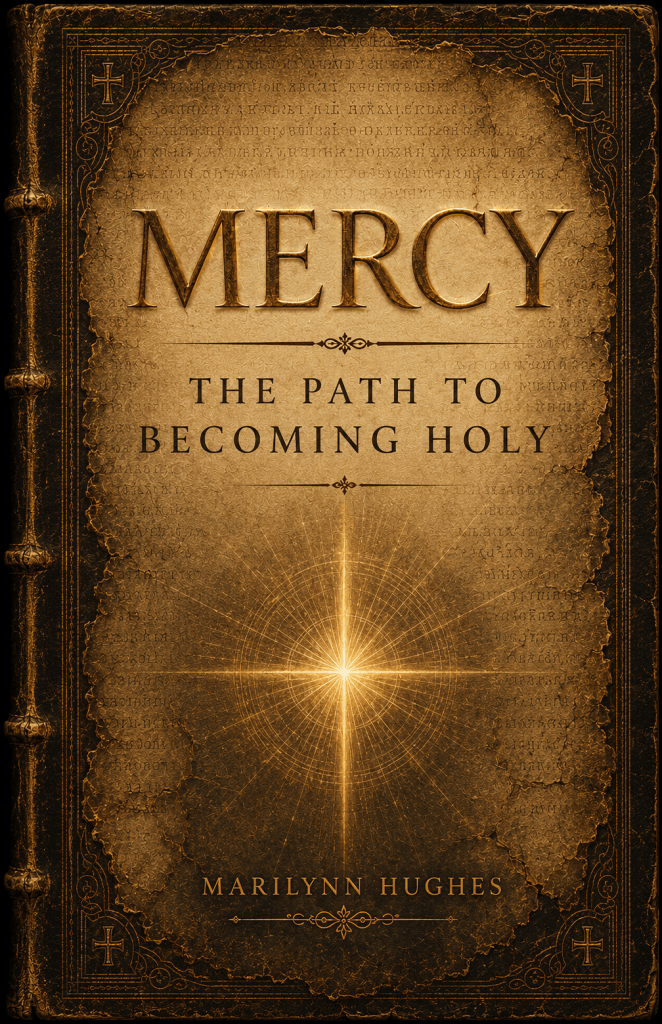
Mercy: The Path to Becoming Holy
By Marilynn Hughes
There is a power that does not destroy in order to rule. It does not overwhelm the soul to break it. It does not withdraw when the soul is weakest. It remains. This power is God’s mercy.
In Mercy: The Path to Becoming Holy, mercy is revealed not as sentiment or abstraction, but as a living divine force that enters the deepest places of human struggle—where identity has hardened, where hope has collapsed, where suffering has become internalized and silent.
This is not a philosophy of consolation. It is a testimony to transformation.
Across the movements of this inquiry, the soul is shown in its many states: bound by inner chains it no longer recognizes, lost within spiritual darkness, pressed by despair, and burdened by suffering it cannot resolve through will alone. And yet, in each condition, mercy is present—not as explanation, but as presence; not as theory, but as action within the soul itself.
Mercy does not wait for the soul to become worthy. It moves first.
It loosens what has become fixed. It enters what has become closed. It remains where the soul believes it is beyond reach. And through this quiet, unwavering presence, something begins to change from within: identity softens, perception opens, despair loses final authority, and what once felt unchangeable begins to yield.
In this vision, holiness is not presented as distance from human weakness, but as the transformation of the soul through sustained contact with divine mercy. Freedom is not escape from life, but liberation within it. And love is not distant ideal—it is the active power shaping reality from within.
Ultimately, this inquiry invites the reader into a single realization that changes everything:
Mercy is not something the soul reaches toward.
It is the divine power that reaches into the soul—and does not let it go.

