
By Marilynn Hughes
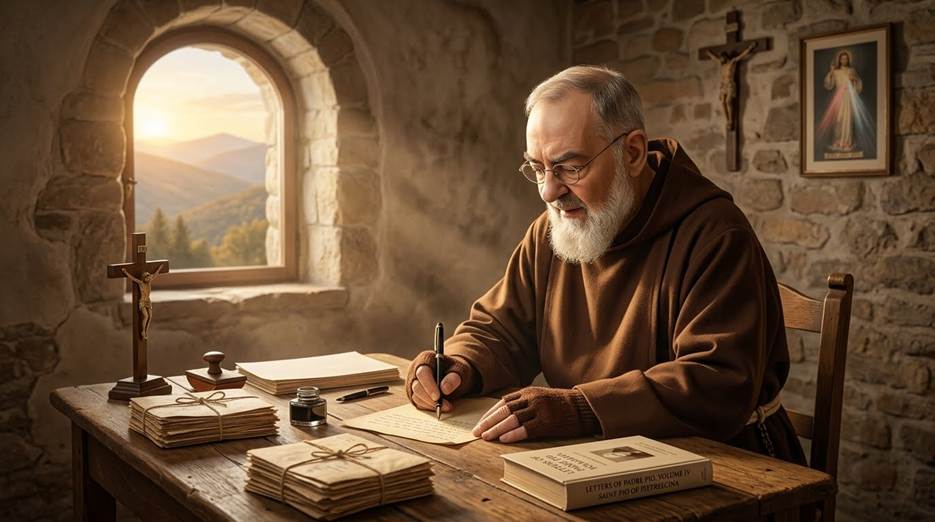
Lately, I have been making my way through Padre Pio’s Letters, Volume IV, the final volume in the English translation of Saint Pio of Pietrelcina’s correspondence which was recently released. While the earlier volumes focus largely on his intense mystical experiences shared with his spiritual directors or his detailed direction of specific spiritual daughters, this fourth volume opens a wider, wonderfully human window into his life. Gathering letters written to his own family members, fellow Capuchin friars, priests, bishops, popes, and ordinary laypeople seeking comfort—alongside essays from the early years of his priesthood—it reveals Padre Pio not only as a towering mystic, but as a devoted son, a loyal friend, and a deeply practical shepherd of souls.
The Missing Bridge Between Mysticism and Daily Life
What makes this fourth volume so compelling is how it bridges the gap between Padre Pio’s hidden interior life and his everyday interactions with the world around him. In these pages, you see him writing with tender affection and humility to his father, Grazio, who was working in America to support the family—including a touching letter in which a young Padre Pio apologizes for spending money on a pilgrimage to Pompeii before entering the friary. You see him corresponding with Church leaders and fellow friars, offering institutional support, charitable concern, and quiet obedience even during seasons when he was restricted from celebrating public Mass.
At the same time, you glimpse his unmistakable firmness when defending the Church he loved. When a well-meaning acquaintance planned to publish a book criticizing the clergy over the restrictions placed upon Padre Pio, the saint did not hesitate to reproach him directly, refusing to let loyalty to him become a weapon against ecclesial unity. Reading these letters side by side reminds you that genuine holiness never detaches a person from human responsibility, family gratitude, or loyalty to the wider community of faith.
Practical Wisdom for Ordinary Struggles
For anyone picking up this volume today, the letters to ordinary men and women facing illness, grief, doubt, and family worries feel remarkably immediate. Padre Pio never wrote abstract theology from an ivory tower; he wrote to real people carrying real crosses, offering spiritual guidance that balanced bracing clarity with deep, fatherly warmth.
Across this correspondence, several timeless threads stand out:
- Trust Over Anxiety. Again and again, Padre Pio urges his correspondents to lay down restless worry and abandon themselves to Divine Providence, reminding them that turmoil of spirit only clouds the soul’s peace.
- Patience in Trial. Rather than promising easy escapes from suffering, he consistently teaches that endurance, daily fidelity, and quiet acceptance unite our small trials to the Cross of Christ.
- Firmness Rooted in Tenderness. Whether encouraging a discouraged soul or gently correcting someone drifting into spiritual extremes, his words carry the unmistakable tone of a spiritual father who genuinely cares for the eternal good of the person holding the letter.
A Companion for Quiet Reflection
One of the joys of reading Letters IV is that you do not even have to read it straight through from cover to cover like a conventional biography. Because each letter was written as a personal response to a specific human heart, opening to almost any page feels like sitting down in a quiet room and receiving a word of counsel meant for that exact moment. Closing the book after each sitting, what lingers most is how seamlessly the extraordinary and the ordinary lived together in Padre Pio—showing that the path to sanctity is walked one faithful, compassionate, and honest letter at a time.

