
By Marilynn Hughes
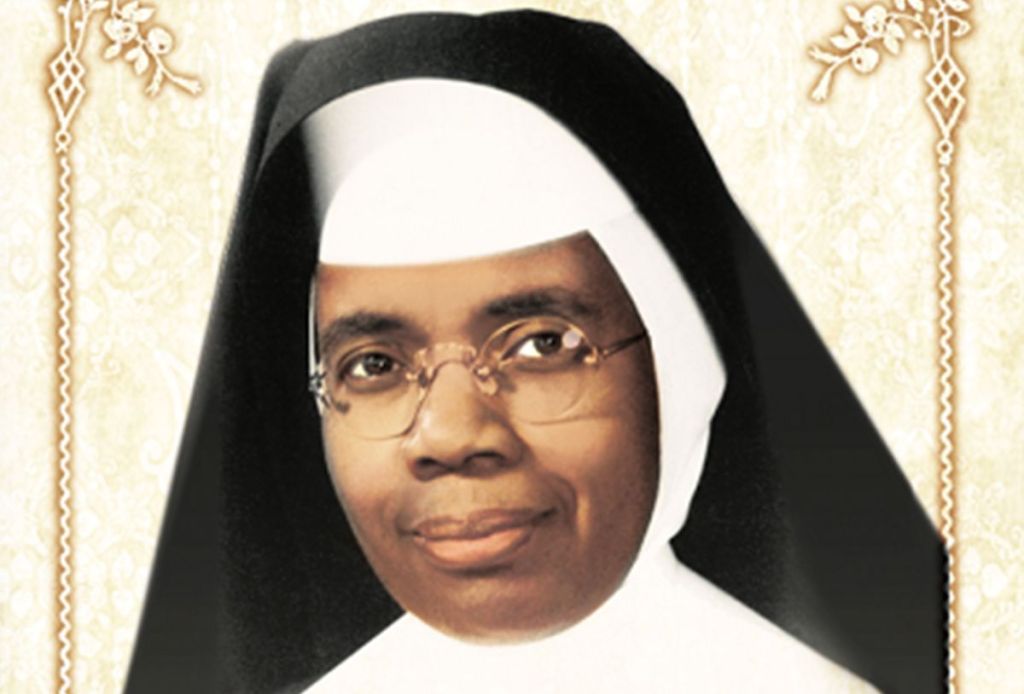
Lately, I have been reading The Life of Sr. Mary Wilhelmina, the biography written by the sisters of her own community, the Benedictines of Mary, Queen of Apostles. While many people around the world first heard of Sister Mary Wilhelmina Lancaster in 2023 through headlines about the remarkable preservation of her body four years after her death, reading through her sisters’ account reveals something even deeper: a woman whose ninety-five years on earth were defined by quiet perseverance, poetic joy, and an unshakable fidelity to her religious vocation.
Early Years and a Lifelong Vocation
Born Mary Elizabeth Lancaster on Palm Sunday, April 13, 1924, in St. Louis, Missouri, she grew up in a devout Catholic family as a descendant of enslaved ancestors. From a very young age, she felt drawn to religious life, even experiencing childhood moments of deep prayer and spiritual awareness that stayed with her throughout her life. In 1941, at just seventeen years old, she entered the Oblate Sisters of Providence in Baltimore—the first successful religious order established in the United States for women of African descent—taking the religious name Sister Mary Wilhelmina of the Most Holy Rosary.
For more than five decades, Sister Mary Wilhelmina served faithfully as a teacher and mentor, dedicating her life to educating children in inner-city schools across the country. Those who knew her during those years remembered her sharp wit, her love for writing poetry, and her deep, steady devotion to the Eucharist and the Blessed Virgin Mary. Navigating the realities of segregation and racial tension both in society and within religious institutions, she remained anchored in her identity in Christ, famously expressing that above every earthly distinction, belonging to God was everything.
A Bold New Chapter at Age Seventy
As decades passed and religious communities underwent sweeping changes in the late twentieth century, Sister Mary Wilhelmina felt a persistent call toward traditional monastic life—specifically the full traditional religious habit, the contemplative rhythm of prayer and work, and the Traditional Latin Mass. Rather than growing bitter or stepping away from religious life, she responded with remarkable courage and trust in Providence.
In 1995, at seventy years old—an age when most people are long settled into retirement—she stepped out in faith to co-found a new contemplative community, the Benedictines of Mary, Queen of Apostles, beginning in Scranton, Pennsylvania, before later establishing their permanent home at the Abbey of Our Lady of Ephesus in Gower, Missouri. Under her gentle guidance as foundress and first prioress, the young community flourished, eventually becoming widely known for their contemplative life and chart-topping recordings of sacred Gregorian chant. Sister Mary Wilhelmina lived to celebrate seventy-five years of religious profession before passing away peacefully at age ninety-five on May 29, 2019.
The Discovery in Gower, Missouri
For four years, Sister Mary Wilhelmina rested in a simple, unsealed wooden casket on the monastery grounds, having been buried without embalming. Then, in the spring of 2023, the sisters exhumed her remains to transfer them to a newly built shrine inside their abbey church. When they opened the casket, they discovered that while the wooden coffin and its lining had deteriorated in the damp Missouri soil, Sister Mary Wilhelmina’s body and religious habit remained remarkably intact.
News of the discovery spread rapidly, drawing tens of thousands of pilgrims to the quiet countryside of Gower, Missouri, to pray at the abbey. Following a formal evaluation by a team of medical experts, Bishop James Johnston of the Diocese of Kansas City-St. Joseph confirmed that her body showed an atypical lack of decomposition nearly four years after burial, with no unusual preservative elements found in the surrounding soil. At the same time, the diocese noted with characteristic Catholic prudence that the Church has no formal protocol for declaring a body incorrupt, that physical preservation alone is not an official sign of sainthood, and that no formal cause for canonization has been opened.
What Stays With You After Closing the Book
Reading The Life of Sr. Mary Wilhelmina, what moves me most isn’t simply the mystery surrounding her tomb—it is the quiet consistency of the ninety-five years that came before it. She did not seek publicity, platforms, or recognition. She taught children, wrote poems, wore her habit with joyful conviction, and started over at seventy because she believed God was asking her to preserve a way of prayer she loved. Whether the Church ever opens a formal cause for her or simply lets her memory rest in the hearts of those who visit Gower, her story is a luminous reminder that a life lived in hidden, faithful surrender to God can echo far beyond anything we could ever imagine.

