A Hidden Life Revealed: Reflecting on The Life of Sr. Mary Wilhelmina

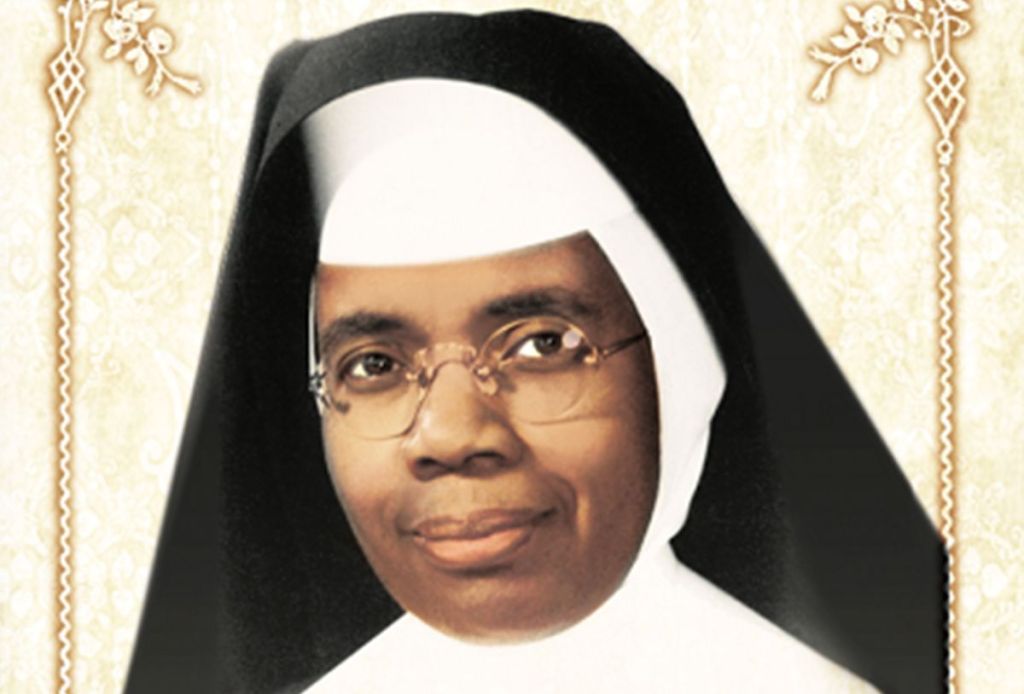
Sister Mary Wilhelmina - Portrait of a nun wearing a black-and-white habit and glasses

By Marilynn Hughes

Lately, I have been reading The Life of Sr. Mary Wilhelmina, the biography written by the sisters of her own community, the Benedictines of Mary, Queen of Apostles. While many people around the world first heard of Sister Mary Wilhelmina Lancaster in 2023 through headlines about the remarkable preservation of her body four years after her death, reading through her sisters’ account reveals something even deeper: a woman whose ninety-five years on earth were defined by quiet perseverance, poetic joy, and an unshakable fidelity to her religious vocation.

Early Years and a Lifelong Vocation

Born Mary Elizabeth Lancaster on Palm Sunday, April 13, 1924, in St. Louis, Missouri, she grew up in a devout Catholic family as a descendant of enslaved ancestors. From a very young age, she felt drawn to religious life, even experiencing childhood moments of deep prayer and spiritual awareness that stayed with her throughout her life. In 1941, at just seventeen years old, she entered the Oblate Sisters of Providence in Baltimore—the first successful religious order established in the United States for women of African descent—taking the religious name Sister Mary Wilhelmina of the Most Holy Rosary.

For more than five decades, Sister Mary Wilhelmina served faithfully as a teacher and mentor, dedicating her life to educating children in inner-city schools across the country. Those who knew her during those years remembered her sharp wit, her love for writing poetry, and her deep, steady devotion to the Eucharist and the Blessed Virgin Mary. Navigating the realities of segregation and racial tension both in society and within religious institutions, she remained anchored in her identity in Christ, famously expressing that above every earthly distinction, belonging to God was everything.

A Bold New Chapter at Age Seventy

As decades passed and religious communities underwent sweeping changes in the late twentieth century, Sister Mary Wilhelmina felt a persistent call toward traditional monastic life—specifically the full traditional religious habit, the contemplative rhythm of prayer and work, and the Traditional Latin Mass. Rather than growing bitter or stepping away from religious life, she responded with remarkable courage and trust in Providence.

In 1995, at seventy years old—an age when most people are long settled into retirement—she stepped out in faith to co-found a new contemplative community, the Benedictines of Mary, Queen of Apostles, beginning in Scranton, Pennsylvania, before later establishing their permanent home at the Abbey of Our Lady of Ephesus in Gower, Missouri. Under her gentle guidance as foundress and first prioress, the young community flourished, eventually becoming widely known for their contemplative life and chart-topping recordings of sacred Gregorian chant. Sister Mary Wilhelmina lived to celebrate seventy-five years of religious profession before passing away peacefully at age ninety-five on May 29, 2019.

The Discovery in Gower, Missouri

For four years, Sister Mary Wilhelmina rested in a simple, unsealed wooden casket on the monastery grounds, having been buried without embalming. Then, in the spring of 2023, the sisters exhumed her remains to transfer them to a newly built shrine inside their abbey church. When they opened the casket, they discovered that while the wooden coffin and its lining had deteriorated in the damp Missouri soil, Sister Mary Wilhelmina’s body and religious habit remained remarkably intact.

News of the discovery spread rapidly, drawing tens of thousands of pilgrims to the quiet countryside of Gower, Missouri, to pray at the abbey. Following a formal evaluation by a team of medical experts, Bishop James Johnston of the Diocese of Kansas City-St. Joseph confirmed that her body showed an atypical lack of decomposition nearly four years after burial, with no unusual preservative elements found in the surrounding soil. At the same time, the diocese noted with characteristic Catholic prudence that the Church has no formal protocol for declaring a body incorrupt, that physical preservation alone is not an official sign of sainthood, and that no formal cause for canonization has been opened.

What Stays With You After Closing the Book

Reading The Life of Sr. Mary Wilhelmina, what moves me most isn’t simply the mystery surrounding her tomb—it is the quiet consistency of the ninety-five years that came before it. She did not seek publicity, platforms, or recognition. She taught children, wrote poems, wore her habit with joyful conviction, and started over at seventy because she believed God was asking her to preserve a way of prayer she loved. Whether the Church ever opens a formal cause for her or simply lets her memory rest in the hearts of those who visit Gower, her story is a luminous reminder that a life lived in hidden, faithful surrender to God can echo far beyond anything we could ever imagine.

Hidden History in the Pews: Discovering the 1980s Apparitions at St. Maria Goretti Parish in Scottsdale

Religious painting of the Virgin Mary praying in a desert landscape at sunset

By Marilynn Hughes

Walking into St. Maria Goretti Catholic Church in Scottsdale, Arizona today, you are greeted by the quiet, welcoming calm of a suburban desert parish. Sunlight filters across the sanctuary, parishioners gather for daily Mass or silent prayer, and the atmosphere feels peaceful and grounded. For a couple of years, I attended Mass here regularly without having any idea that this quiet church had once been at the center of a widely followed spiritual phenomenon. It was only by chance that I recently learned that back in the late 1980s and early 1990s, hundreds of people filled these very pews every Thursday night, drawn by reports that Jesus and the Virgin Mary were appearing and speaking to a group of local parishioners and their pastor. Looking at the story of the parish then versus now reveals a fascinating, deeply human, and complex chapter of modern spiritual history.

Then: A Desert Parish Awakened (1987–1992)

The story of the Scottsdale events began in 1987, during a time when reports of Marian apparitions in Medjugorje, Yugoslavia, were drawing global interest among Catholics. That year, St. Maria Goretti’s pastor, Father John “Jack” Spaulding, visited Medjugorje and returned to Arizona inspired to start one of the earliest Medjugorje-style prayer groups in the United States. Soon after, extraordinary spiritual experiences began being reported within the parish community. A twenty-nine-year-old parishioner named Susan Evans shared with Father Spaulding that she was experiencing interior locutions—words perceived internally from a divine source—along with a vision indicating that a circle of nine young adults at the parish would receive messages from Heaven.

Before long, those young adults began coming forward with their own accounts of interior locutions and apparitions of Jesus and the Virgin Mary, whom they referred to as Our Lady of Joy. Father Spaulding also stated that he was receiving ongoing locutions. By December 1987, the parish began hosting weekly Thursday evening Rosary and prayer gatherings where the reported messages were read aloud to those gathered. News traveled quickly across the Phoenix valley and beyond, and soon hundreds of people were arriving at St. Maria Goretti every Thursday night to pray together and listen to the messages.

The Primary Visionary: Gianna Talone-Sullivan and the Road to Emmitsburg

Among the Scottsdale group, the figure who became most widely known was Gianna Talone, a thirty-year-old clinical pharmacist living in Scottsdale. Her experiences began in late 1987 with three consecutive nights of vivid visions in which the Virgin Mary appeared silently beside her bed, praying over her. Although Mary did not speak during those first encounters, Gianna felt moved toward deeper prayer, daily Mass, the Eucharist, and the Rosary. In June 1988, she joined Father Spaulding and nearly a hundred parishioners on a pilgrimage to Medjugorje, where she reported seeing the Infant Jesus and hearing the Blessed Mother speak to her for the first time.

Upon returning to Scottsdale, Gianna continued reporting apparitions and sharing weekly messages during the Thursday evening prayer meetings at St. Maria Goretti, which were later compiled into six published volumes titled I Am Your Jesus of Mercy. Her life entered a new chapter in November 1992 during a Scottsdale prayer gathering, when she reported that Our Lady pointed out a visiting physician in attendance named Dr. Michael Sullivan. The two later married, and in January 1993 they traveled together on a pilgrimage to Emmitsburg, Maryland—a historic center of American Catholicism home to Mount St. Mary’s Seminary and the national shrine of St. Elizabeth Ann Seton. According to Gianna, Mary appeared to her in Emmitsburg and invited the couple to move there. Later in 1993, they relocated from Arizona to a property near Fairfield, Pennsylvania, just a few miles north of Emmitsburg, where Gianna began sharing her weekly messages at St. Joseph’s Catholic Church.

How the Catholic Church Evaluated the Apparitions

As the gatherings in Scottsdale grew in the late 1980s, local Church leadership initiated a formal discernment process. In June 1989, Bishop Thomas O’Brien of the Diocese of Phoenix appointed an investigative commission to interview those involved and review the messages. By 1990, the commission concluded that the reported visions and locutions were not miraculous and could be explained within ordinary human experience. Because the early Scottsdale messages centered on traditional themes of prayer, mercy, and devotion without contradicting Catholic faith or morals, Bishop O’Brien adopted a neutral pastoral approach—neither formally approving nor condemning the events, while leaving individual Catholics free to discern them for themselves.

As Gianna Talone-Sullivan’s ministry continued in Maryland during the late 1990s and early 2000s, the content of the reported messages—now attributed to Our Lady of Emmitsburg—increasingly included dramatic prophetic warnings regarding future global events and upheavals. In September 2000, the Archdiocese of Baltimore ended her public prayer services at St. Joseph’s Church, stating there was no basis to support a supernatural origin and noting elements incompatible with Catholic teaching. Cardinal William Keeler subsequently convened a theological and canonical commission that reviewed roughly six hundred pages of documentation. In 2003, with the concurrence of the Vatican’s Congregation for the Doctrine of the Faith, Cardinal Keeler issued a formal decree declaring the visions non-supernatural. After followers continued organizing off-site gatherings and sharing messages online, Archbishop Edwin O’Brien issued an additional directive in October 2008, instructing Talone-Sullivan not to communicate or disseminate any alleged messages within the archdiocese in order to maintain parish unity and clarity for the faithful.

Now: Where the Visionaries, Father Spaulding, and the Parish Are Today

More than three decades after those crowded Thursday evenings in Scottsdale, the paths of everyone involved have unfolded in very different ways. Gianna Talone-Sullivan continues to live in the Fairfield and Emmitsburg area, where she co-founded the nonprofit medical clinic Mission of Mercy and continued reporting private messages supported by a lay organization, the Foundation of the Sorrowful and Immaculate Heart of Mary, operating independently of official Church sponsorship.

Back in Arizona, the other members of the original Scottsdale circle largely stepped away from public life. Most of the nine young adults gradually ceased sharing public messages, remained in the Phoenix area, and returned to quiet, private lives as lay Catholics. One exception was Carol Ameche, another member of the Scottsdale group, who continued independently publishing messages and prophetic writings attributed to Heaven into the 2000s, which Catholic theologians likewise classified as unapproved private revelations.

The most painful chapter of the parish’s later history involved Father Jack Spaulding, the pastor who had originally championed the prayer meetings. In 2011, the Diocese of Phoenix permanently removed him from active ministry after a diocesan review board found multiple allegations of sexual abuse of minors to be credible, including incidents dating back to his tenure at St. Maria Goretti in the mid-1980s. He was later recommended for laicization and died in 2020 while facing criminal charges, leaving a sobering mark on the legacy of the parish’s leadership from that era.

Reflections from the Pew Today

Knowing this history now, sitting inside St. Maria Goretti feels a little different—not because the quiet warmth of the church has changed, but because you realize how much layered human and spiritual history a single parish can hold. After attending Mass there for a couple of years without ever hearing a whisper of those crowded Thursday nights, stumbling across the story by chance was a reminder that sacred spaces often carry quiet echoes of the past.

Even today, the church has a distinct character that sets it apart across the Diocese of Phoenix. Beneath its soaring, seventy-foot hyperbolic dome stands a grand, multi-division M. P. Möller pipe organ—a rare and remarkable instrument for a parish in the Arizona desert, where full-scale pipe organs are uncommon. With ranks spanning galleries in both the north and west transepts, its rich, resonant music fills the sanctuary during liturgy, lifting the space in a way that feels truly transcendent. Whether people view the parish’s 1980s history through the lens of personal devotion, sincere spiritual searching, or the Church’s careful discernment, St. Maria Goretti today remains a unique and peaceful neighborhood sanctuary—a place where quiet stillness, deep faith, and the timeless beauty of sacred music continue to welcome everyone who walks through its doors.