The Trap of the Misunderstood Rebel

A robed figure reads an open mystical book while a cosmic being reaches toward a radiant celestial city in the clouds.

By Marilynn Hughes

Throughout the history of spiritual thought, there have been movements that have attempted to reinterpret the nature of the Fall, and the meaning of humanity’s acquisition of knowledge. In certain currents of nineteenth-century occultism, the figure of the adversary was traditionally understood as the adversary of God was recast as a misunderstood bearer of light, an emblem of intellect, or a necessary force in the evolution of human consciousness. What had traditionally represented rebellion against Divine Authority was given a new intellectual interpretation, and what had been understood as a spiritual catastrophe was sometimes presented as an act of illumination.

This transformation deserves careful attention, because it reaches into the very heart of the original temptation described in the Fall: the belief that human intelligence can become a supreme authority in itself, independent of the wisdom and will of God.

The reinterpretation of the primordial rebel against God as a bearer of light or a symbol of intellectual enlightenment can be particularly persuasive because it takes what is traditionally understood as rebellion against God and gives it the appearance of spiritual advancement. By emphasizing associations with light, knowledge, and illumination, certain occult writers attempted to portray this rebellious force not as an adversary of Divine Will, but as an agent of awakened human intelligence, encouraging humanity to progress beyond traditional religious understanding. Yet this interpretation overlooks the essential spiritual reality of the Fall: the choosing of one’s own will over the Will of God. The acquisition of knowledge does not make rebellion holy, nor does the appearance of illumination establish that its source is Divine.

The question is not whether humanity should seek knowledge. The question is whether knowledge is being pursued in humility before God or in the conviction that human beings can establish their own authority over spiritual truth. When rebellion is renamed enlightenment, when self-will is renamed liberation, and when disobedience is presented as a necessary step beyond traditional faith, the original temptation has merely acquired a more sophisticated vocabulary.

I have come to understand this danger through repeated mystical experiences in the spiritual realms. The Lord Demon has been shown to me repeatedly as a real demonic force and, in my experience, the greatest threat to the human soul. His work is extraordinarily effective because he does not always approach through an obvious invitation to evil. He can work through the human desire to become more knowledgeable, more advanced, more powerful, and more spiritually sophisticated. He can persuade people that their intelligence places them beyond the need for faith, that their knowledge makes obedience unnecessary, and that devotion to God belongs to those who have not yet attained their supposed level of understanding.

This is one of the most effective deceptions because it can make the movement away from God appear to be a movement toward greater light.

The Lord Demon’s strategy is rooted in the same spiritual inversion that lies at the heart of the Fall. The forbidden knowledge of good and evil is not simply the possession of information. It is the prideful elevation of human self-intelligence above the supreme knowledge of God. It is the conviction that the human mind can determine spiritual truth independently of its Creator, and that humanity can become its own final authority. Once this conviction takes hold, faith can be dismissed as ignorance, humility as weakness, and obedience as an obstacle to spiritual advancement.

Yet the genuine mystical path teaches something entirely different.

The more deeply a soul is purified, the more clearly it comes to understand the limitations of its own intellect. Human reasoning may study spiritual realities, describe religious traditions, and construct elaborate systems of interpretation, but it cannot command the Divine Presence or manufacture union with God. The soul does not become illuminated by declaring itself independent of the Source of Light. It becomes receptive through purification, humility, surrender, and the gradual relinquishment of self-will.

The great Christian mystics understood that spiritual advancement was not a process of making the individual ego increasingly powerful. It was a process of emptying the soul of the demands of the ego so that it might become receptive to the action of God. The Dark Night of the Senses and the Dark Night of the Spirit describe, in profound ways, the stripping away of the attachments and assumptions through which the human mind attempts to possess spiritual experience on its own terms. This is not the destruction of the soul’s capacity to know. It is the purification of that capacity so that it no longer mistakes itself for the source of truth.

In this understanding, obedience is not the enemy of illumination. It is one of its essential safeguards. A soul that has genuinely encountered the supremacy of God does not imagine that a spiritual experience gives it permission to place its own will above the Divine Will. The deeper the encounter, the deeper the recognition that God alone is sovereign.

This is why the attempt to reinterpret rebellion as enlightenment is so dangerous. It confuses the brilliance of human intellect with the uncreated Light of God. It allows spiritual pride to dress itself in the language of liberation, and it can lead people to mistake independence from God for spiritual maturity.

The Lord Demon’s greatest success is not necessarily in persuading people to reject every form of religion. It is in persuading them that they have become too advanced to need the humility, faith, and obedience through which the soul remains anchored in God. He can use intellectual achievement, spiritual terminology, elaborate cosmologies, and claims of hidden knowledge to make this separation appear noble.

But the soul’s true liberation does not come through rebellion against its Creator. It comes through the surrender of everything that would place the human will above the Divine Will. The Light of God does not require us to overthrow God in order to receive it. It requires us to become humble enough to receive what God alone can give.
Honoring a Shared Lineage: Exploring “Natural Alignment” with The Monroe Institute

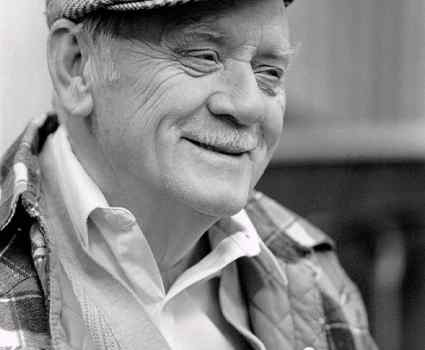
Black-and-white portrait of an older smiling man wearing a flat cap and jacket
Bob Monroe

By Marilynn Hughes

Honoring a Shared Lineage: Exploring “Natural Alignment” with The Monroe Institute

When two organizations spend decades mapping the vast terrain of human consciousness from complementary vantage points, their paths are bound to converge. In October 2026, Emily Ghosh, Director of Creator Relationships at The Monroe Institute, reached out to The Out-of-Body Travel Foundation’s founder, Marilynn Hughes, in deep appreciation of her forty-year archive—recognizing what she described as a “natural alignment” between their missions to advance the global awakening of human consciousness. While this marks the beginning of an exciting formal dialogue, the roots of this connection stretch back more than three decades.

The Pioneering Legacy of Robert A. Monroe and The Monroe Institute

To understand the significance of this dialogue, it helps to look back at the remarkable history of The Monroe Institute. In 1958, Robert A. Monroe—a successful radio broadcasting executive—began experiencing spontaneous, involuntary out-of-body experiences. Rather than dismissing these profound shifts in awareness, Monroe approached them with the curiosity of an explorer and the rigor of a scientist.

Through the Research and Development Division of Monroe Industries, he began investigating how specific acoustic patterns could safely and reliably guide the human mind into expanded states of awareness without the use of drugs or dogma. His groundbreaking research culminated in the 1971 publication of his classic memoir, Journeys Out of the Body—a book that introduced the term “out-of-body experience” into mainstream vocabulary—and the official founding of The Monroe Institute as a 501(c)(3) non-profit organization in Faber, Virginia. Over the past fifty years, the Institute has welcomed tens of thousands of seekers to its Virginia campus and online programs, developing Monroe Sound Science and flagship courses like the Gateway Voyage to help individuals explore non-physical reality and inner guidance.

Decades of Shared Lineage and Synchronistic Ties

For The Out-of-Body Travel Foundation, engaging with The Monroe Institute feels less like a new introduction and more like a homecoming. Marilynn Hughes’s connection to Robert Monroe’s legacy dates back to 1991, when her very first publishers at Hampton Roads Publishing—who were personal friends of Bob Monroe—published her early work alongside remote viewing pioneer Joe McMoneagle. Joe graciously offered a review of Marilynn’s work for the Foundation’s website, and that thread of lineage continued through the decades. Years later, she spoke with his wife, Nancy McMoneagle, about visions for bringing the Institute’s work out West, and in 2018, she earned certification in Controlled Remote Viewing along with specialized training in Transdimensional and Associative Remote Viewing under Michelle Freed-Bulgatz, who was trained directly by Joe.

More recently, that historical thread wove right into Phoenix, Arizona. At the invitation of its co-creators, Chad Andrews and longtime colleague Mark Certo—one of Robert Monroe’s original sound engineers—Marilynn had the opportunity to experience the Ascension Chamber firsthand. Experiencing the craftsmanship of those who worked directly alongside Bob Monroe reaffirmed how deeply their parallel paths have been intertwined all along.

Looking Ahead: Supporting Seekers in Expanded States of Consciousness

As The Out-of-Body Travel Foundation launches its dedicated spotlight for The Monroe Institute on its Collaborations page this November, both teams are energized by the possibilities ahead. In recent correspondence, Emily Ghosh and Marilynn Hughes have begun exploring simple, meaningful ways to cross-pollinate their communities—from sharing insights on the intersection of comparative mysticism and consciousness research, to spotlighting sound technology and open-access educational resources for seekers worldwide.

Whether approached through the lens of acoustic science or timeless contemplative mysticism, the goal remains the same: empowering individuals to safely navigate expanded states of awareness and discover their own profound spiritual truth. More updates will be shared as this collaborative dialogue unfolds.

The Lost Books of the Essenes: A Mystical Interpretation of the Dead Sea Scrolls

BY MARILYNN HUGHES

The Lost Books of the Essenes: A Mystical Interpretation of the Dead Sea Scrolls

By Marilynn Hughes

What happens when an ancient spiritual world, long hidden from ordinary awareness, suddenly opens itself again? In a mystical experience, Marilynn Hughes was sitting within a mystical sphere playing guitar when approximately thirty hooded monks began emerging from an ancient jar positioned before her. She immediately recognized them as Essenes. One monk stepped forward and quietly placed a book into her hands, its title, The Lost Books of the Essenes. Later, after she had returned to her physical body, a single hooded monk appeared beside her bed, standing in prayer over her sleeping soul before slowly disappearing as consciousness returned.

That experience opened an extraordinary encounter with the spiritual world surrounding the Essenes and the writings preserved among the Dead Sea Scrolls. Rather than approaching these ancient manuscripts solely as archaeological discoveries or historical artifacts, The Lost Books of the Essenes: The Dead Sea Scrolls explores the spiritual path that emerges from their world: the pursuit of purity, sacred discipline, Divine order, heavenly worship, revelation, spiritual discernment, and the movement from ordinary awareness toward a deeper receptivity to God.

The Dead Sea Scrolls preserve a remarkable body of ancient Jewish literature, including biblical manuscripts, prayers, hymns, legal and communal writings, commentaries, calendrical texts, apocalyptic works, and mystical visions dating largely from the Second Temple period. The community associated with Qumran has traditionally been identified with the Essenes, although the precise relationship between the settlement, its inhabitants, and the wider Essene movement remains a matter of scholarly discussion. Within that historical mystery lies a spiritual mystery: what kind of people would devote themselves so completely to purification, communal discipline, sacred study, prayer, and preparation for Divine fulfillment?

The Essene path reveals a vision in which spiritual knowledge is not merely something to acquire, but something for which the human being must become prepared. Purification clears what obscures perception. Discipline gives steadiness to intention. Awakening allows what was previously unseen to become perceptible. Opening makes the heart receptive to what cannot be forced. Illumination allows hidden meaning to become inwardly clear, while alignment brings one’s life into greater correspondence with what has been recognized. Surrender releases the need to control Divine revelation, and receiving allows what cannot be manufactured through human effort to enter consciousness.

Within the writings and traditions surrounding the Dead Sea Scrolls are profound explorations of Light and Darkness, the Two Spirits, angels and heavenly realms, sacred time, communal holiness, ritual and inner purity, the mysteries of creation, Divine revelation, and the anticipated fulfillment of God’s purposes. These themes reveal a spiritual vision in which the visible world is not regarded as the whole of reality and the human being is capable of a deeper relationship with the Divine through purification, attention, prayer, and openness.

Yet the deepest mystery may not be found in any single manuscript. It may be found in the possibility that the ancient writings were preserving more than information. They were preserving a way of approaching existence, a discipline of consciousness, and a vision of what becomes possible when the heart is prepared to recognize Divine reality. The caves may have concealed the manuscripts for centuries, but the questions they contain remain remarkably alive: What must be cleared within us before we can see clearly? What must become quiet before we can hear? What must be surrendered before we can receive? And what might become possible when the heart is opened to the Light?

The Lost Books of the Essenes: The Dead Sea Scrolls invites the ancient world of Qumran into a living mystical encounter, bringing together the forgotten writings, the spiritual disciplines, the mysteries of Light and Darkness, and the deeper question of what it means to prepare the human being for Divine presence. It is a journey into a world that disappeared from ordinary history but whose spiritual questions remain capable of opening something within us today.

Reviews

“I quickly realized upon beginning this book that it was one I wouldn’t easily put down. I was immediately drawn into it. It became more than just a mystical interpretation. Marilynn took me on a journey into deeper discovery, awareness and understanding of myself as a seeker.

This book is her mystical interpretation, but it is a Seeker’s Guide to Personal and Spiritual Transformation. It is a roadmap for those of us who are seekers. The Essenes just happened to be the doorway.

I absolutely loved this book. Every question within the book could be in its own workbook for more in-depth study and contemplation. It is a book within a book that needs its own manual for seekers. There could easily be more volumes that could be written from just this one book. It is full of pearls of wisdom. It felt like it could be the encyclopedia her book, “The Hammer of Mysticism” was. It touched on many areas that were very personal in my own life experience.

I intend to go back through it again to slowly digest and contemplate the in-depth questions she presented, and re-read every sentence that began with, “A seeker…”. My book is full of highlights so it will take some time.

I thoroughly enjoyed “The Lost Book of the Essenes”, and I would highly recommend reading it. The book is very transformative. Thank you, Marilynn.” – Windsong, Houston, TX, USA

“I recently came across your book, The Lost Books of the Essenes: A Mystical Interpretation of the Dead Sea Scrolls, part of the Ancient Sacred Texts and from the Mystical Scriptorium series, and wanted to reach out because the concept immediately caught my attention.

What stood out most was how the book opens with a mystical experience in which approximately thirty hooded monks emerged from an ancient jar, and one of them quietly placed a book into your hands titled The Lost Books of the Essenes. Rather than approaching the Dead Sea Scrolls solely as archaeological discoveries or historical artifacts, it explores the spiritual path that emerges from their world, the pursuit of purity, sacred discipline, Divine order, heavenly worship, revelation, spiritual discernment, and the movement from ordinary awareness toward a deeper receptivity to God. From Light and Darkness, to the Two Spirits, to angels and heavenly realms, to sacred time and communal holiness, to ritual and inner purity, to the mysteries of creation and the anticipated fulfillment of God’s purposes, all presented as a vision in which the visible world is not the whole of reality and the human being is capable of a deeper relationship with the Divine.

Drawing from the ancient Jewish literature preserved among the Dead Sea Scrolls, including biblical manuscripts, prayers, hymns, legal and communal writings, commentaries, calendrical texts, apocalyptic works, and mystical visions dating largely from the Second Temple period, your book offers a profound guide for readers who sense that the ancient writings were preserving more than information. They were preserving a way of approaching existence, a discipline of consciousness, and a vision of what becomes possible when the heart is prepared to recognize Divine reality. That combination of scholarship and mystical resonance is exactly what drives word of mouth discovery.

Congratulations on publishing it. Behind every finished manuscript are countless hours most readers never see, and your work serving seekers of mysticism, students of the Dead Sea Scrolls, readers of comparative religion, and anyone drawn to the Essene path reflects real depth and generosity.” – Han Cooper, Reader, USA

Pensatia: Present Balance – The Mystical Teachings of Helen Merrick Bond

BY MARILYNN HUGHES

Pensatia: Present Balance – The Mystical Teachings of Helen Merrick Bond

By Marilynn Hughes

Who was Pensatia? Writing under the name Pensatia, Helen Merrick Bond produced a remarkable body of mystical literature within the Rosicrucian tradition. Her writings explored spiritual transformation, illumination, the Master and disciple, the soul, consciousness, initiation, mystical symbolism, and the search for a deeper relationship with the Divine. Yet despite the depth and distinctiveness of her work, Pensatia has largely disappeared from contemporary spiritual history.

Pensatia: Present Balance seeks to recover her voice.
Drawing upon Pensatia’s published writings, AMORC materials, historical and bibliographical sources, and relevant secondary and esoteric traditions, this book examines the architecture of her mystical thought while remaining attentive to the distinction between documented history, Pensatia’s own teachings, and later interpretation.

At the heart of Pensatia’s vision are powerful symbols: the Flame of White, the Rose of Life, the Inner Signature, the Sacred Center, the High Mountain, the Lotus of Wisdom, the Magnetic Light, the Stone and the Elixir, the Door of the Heart, and the mysterious figure of Master H. These are not treated merely as isolated symbols, but as elements within a larger vision of spiritual transformation.


The book follows the movement of the seeker from the discovery of the Divine within, through discipleship, initiation, illumination, and transformation, toward a deeper integration of spiritual and earthly existence.
Its culminating theme is Present Balance: the recognition that mystical realization is not an escape from human life, but a transformation of the way life itself is inhabited. Spirit and matter, contemplation and action, individuality and unity, aspiration and acceptance, human consciousness and Divine Presence must ultimately be brought into relationship.

This volume also preserves an important bibliographical mystery. AMORC documentation indicates that twelve works were published under the name Pensatia, while eleven have presently been identified. The missing twelfth work remains unknown.

For readers of mysticism, Rosicrucian spirituality, esoteric Christianity, comparative religious thought, and the history of forgotten spiritual writers, Pensatia: Present Balance offers both an introduction to a neglected mystic and an invitation to encounter her writings anew.

The books remain. The mystery remains. And the search for Pensatia continues.

Reviews

“I recently came across Pensatia: Present Balance, and what particularly caught my attention was that the book is doing more than presenting a spiritual text it is helping bring attention back to a largely overlooked figure in mystical history. The combination of Pensatia’s teachings, Rosicrucian thought, spiritual transformation, mystical symbolism, historical research, and the bibliographical mystery surrounding the unidentified twelfth work gives the book several distinctive points of interest.” – Gabriela Taylor, Pittsburgh, PA, USA

“Dear Marilynn, The detail that stays with me is the missing twelfth work. AMORC documentation indicates twelve works were published under the name Pensatia. Eleven have been identified. One remains unknown. You’ve preserved that mystery rather than resolving it. That takes a certain kind of reverence. Not everything needs to be solved. Some things need to be held.

What interests me about Pensatia: Present Balance is the ground it stands on. You founded The Out-of-Body Travel Foundation in 2003 with a mission to reduce spiritual hunger worldwide. You’ve studied the ancient sacred texts of major and minor world religions. You’ve authored 148 books. You’ve experienced, researched, written, and taught about mysticism since 1987. This isn’t a project you stumbled into. It’s part of a lifelong vocation. And now you’ve turned that vocation toward recovering a voice that was nearly lost. Helen Merrick Bond. Pensatia. A Rosicrucian mystic whose work explored spiritual transformation, illumination, the Master and disciple, the soul, consciousness, initiation, mystical symbolism. You’ve examined the architecture of her thought while remaining attentive to the distinction between documented history, her own teachings, and later interpretation. That’s not just scholarship. It’s stewardship.

You’ve said the books remain. The mystery remains. And the search for Pensatia continues. That’s not just an ending. It’s an invitation. For readers of mysticism, Rosicrucian spirituality, esoteric Christianity, comparative religious thought, and the history of forgotten spiritual writers. You’re giving them both an introduction to a neglected mystic and a reason to keep looking. You had your first out-of-body experience at nine years old. You were told you would be given a mission. This work feels like part of it.” – Rowan Ellis, Traverse City, MI, USA

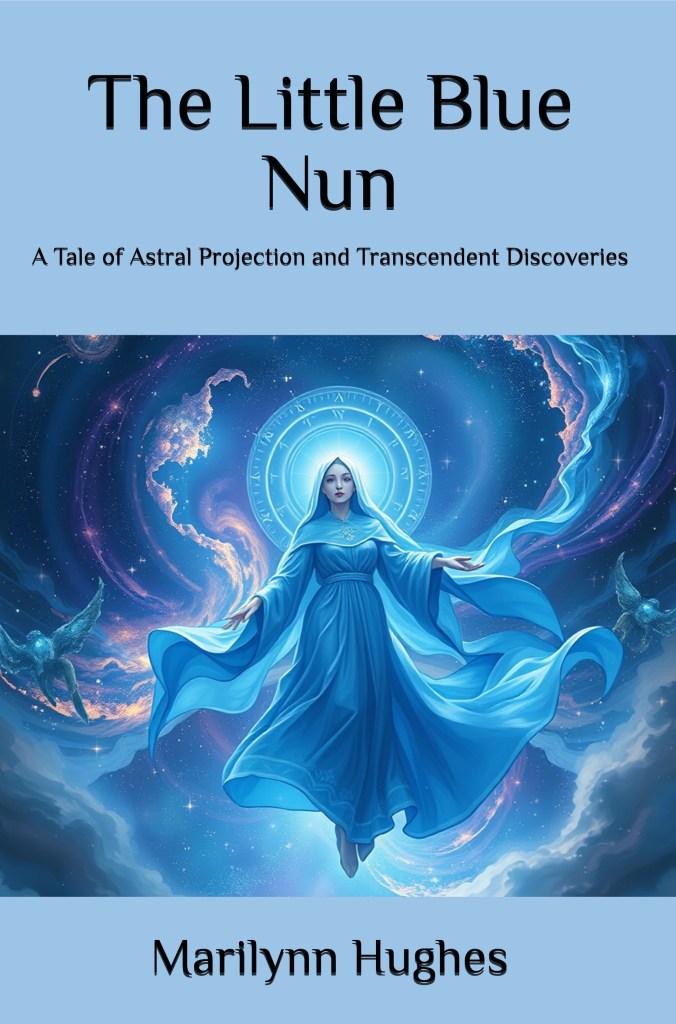
The Little Blue Nun: A Tale of Transcendent Discoveries and Astral Projection

BY MARILYNN HUGHES

The Little Blue Nun: A Tale of Transcendent Discoveries and Astral Projection

By Marilynn Hughes

The Little Blue Nun: A Tale of Astral Projection and Transcendent Discoveries – In The Little Blue Nun: A Tale of Astral Projection and Transcendent Discoveries, readers are beckoned into the boundless realms beyond the physical world into the infinite expanses of the cosmos, where the nature of reality is fluid and consciousness knows no limitations. Through the ethereal presence of the Little Blue Nun, a cosmic guide and astral projectionist, we embark on a celestial journey that transcends the constraints of time, space, and form.

As the Little Blue Nun ventures through the vast web of interconnected souls, she journeys to distant corners of the universe, reaching beyond the material world to heal, guide, and uplift the spirits in need. She moves through shimmering dimensions of light, traversing the astral planes where the physical body falls away, and only the essence of the soul remains. With every mission, she brings peace and healing, reuniting lost souls with their higher selves and helping them find balance in the ever-expanding universe.

Each chapter is a cosmic odyssey, an exploration of the deep mysteries of existence. The Little Blue Nun encounters not only troubled souls, but also explores the intricate dance of love, forgiveness, and universal unity that binds all beings. Whether she is aiding a soul to reconcile with their past or guiding a wandering spirit toward enlightenment, her transcendent adventures open the door to greater understandings of our collective journey through the cosmos.

This book is an invitation to explore the very nature of reality and consciousness itself. It serves as a cosmic meditation on the boundless potential of the human spirit and the transformative power of unconditional love. Through the eyes of the Little Blue Nun, readers are reminded that we are not isolated beings; rather, we are all interconnected by unseen threads of light that stretch across the universe, linking us to one another and to the very fabric of existence.

The Little Blue Nun’s journeys reveal that we are part of an infinite, ever-evolving tapestry of creation, one that transcends the limits of time and space, where all things are connected in an eternal dance of energy, love, and wisdom. Each soul, each encounter, is a reflection of the vast and mysterious cosmos in which we all reside.

This book encourages readers to look beyond the veil of the physical world, to step into the boundless expanses of the spirit, and to awaken to their own divine potential. It is a call to transcend the mundane, to explore the realms of higher consciousness, and to recognize that the universe itself is alive with spiritual energy, waiting to be discovered.

In the end, The Little Blue Nun is more than just a story. It is a cosmic reminder that we are all travelers through the stars, united in our shared journey of spiritual awakening. Each chapter is a portal to a higher understanding, where love, healing, and enlightenment are waiting to be discovered if only we open our hearts to the infinite possibilities of the universe.

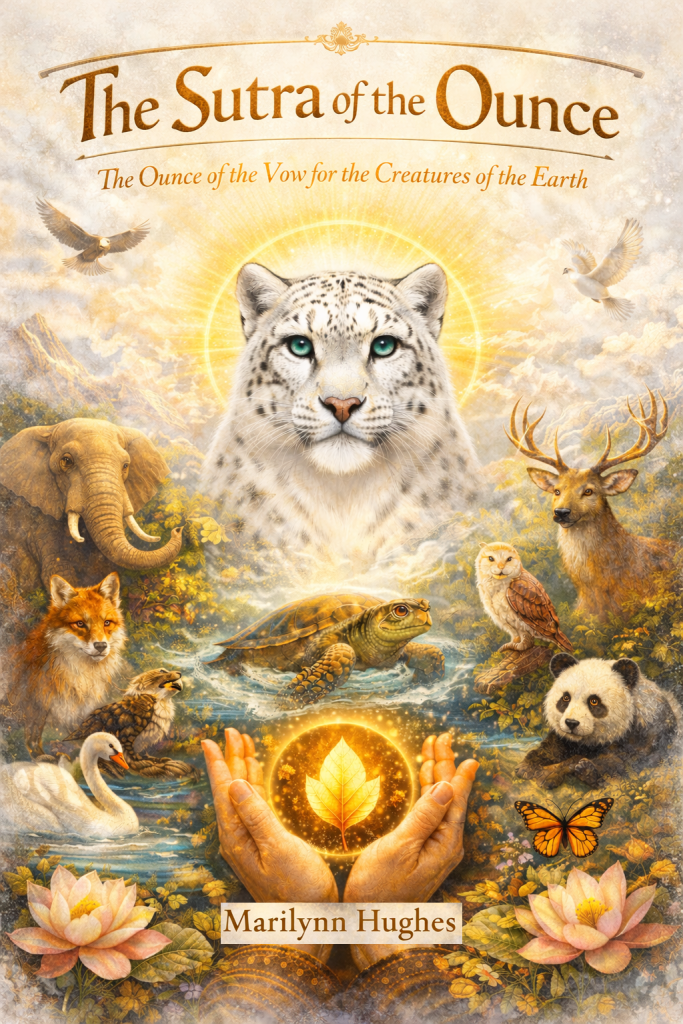
There is a link below to the companion book, ‘The Sutra of the Ounce: The Ounce of the Vow for the Creatures of the Earth,’ By Marilynn Hughes.

An Astral Projection and Out of Body Travel Book by Marilynn Hughes

Astral Projection, Astral Travel, Out of Body Travel, Out of Body Experiences, Out of Body, OBE, Near Death Experiences, Mystical Experiences, Marilynn Hughes

When Three Generations Share a Roof: Finding Rhythm in a Full House

Guest Post by Susan Treadway

The return of the multigenerational household isn’t a passing trend—it’s a reflection of
how families are adapting to modern realities. Rising housing costs, shifting cultural values,
and aging family members have brought grandparents, parents, and children under one
roof again. And while there’s something timeless about multiple generations living
together, the daily logistics of it can get messy fast. Creating a harmonious home takes
more than goodwill—it takes foresight, flexibility, and a bit of strategy.

Design for Dignity, Not Just Space

When three generations live together, physical space becomes emotional space. The way a
home is arranged can either foster independence or breed resentment. Giving
grandparents a semi-private space—ideally with their own bathroom and sitting area—
allows them to feel like participants, not burdens. This isn’t just about comfort; it’s about
preserving the dignity of older family members who have spent a lifetime being
independent.

Make Room for Parenting Styles Without Collisions

Parents and grandparents don’t always see eye to eye when it comes to raising kids, and
that’s normal. But if discipline turns into a tug-of-war, children get caught in the middle.
Establishing clear boundaries and agreeing on non-negotiables—like screen time rules or
bedtime routines—helps keep everyone’s authority intact. The key isn’t perfect alignment,
but mutual respect and a shared commitment to consistency.

Safeguard the Budget Without Guesswork

Unexpected appliance failures and system breakdowns can throw any multigenerational
household into disarray—not just logistically, but financially. One way to steady the ship is
by investing in home warranty coverage for appliances, which can cushion the blow when
major systems falter. It’s worth seeking out plans that not only handle repairs but also
include removal of failed equipment and cover issues caused by poor installations or past
repair mistakes. In a full house, protection like this isn’t overkill—it’s peace of mind.

Celebrate Autonomy, Especially for Teenagers

In a multigenerational setup, teenagers often end up feeling like they’re constantly being
watched—by parents and grandparents alike. Giving them a zone of their own, both
physically and emotionally, goes a long way. Let them choose how their room looks, allow
for downtime without interruptions, and carve out moments where they can just be.
Independence isn’t rebellion—it’s a basic human need that deserves space.

Hold a Family Meeting, But Skip the Formalities

Nothing kills momentum faster than a rigid, overly scheduled “family meeting.” But regular,
low-stakes check-ins—maybe around dinner or during a shared walk—keep
communication flowing. These moments allow frustrations to surface before they become
grievances, and help everyone feel seen and heard. The goal isn’t to solve every issue, but to
make it safe to talk about them.

Create Rituals That Don’t Feel Like Chores

Shared meals are the obvious choice, but rituals can go well beyond the dinner table.
Weekly movie nights, gardening on Sunday mornings, or even a rotating “story hour” led by
a different family member each week builds cohesion. Rituals work best when they feel
voluntary, not obligatory. It’s about creating moments where generations connect as
equals, not just out of duty.

Respect the Noise, But Respect the Silence Too

A home filled with multiple generations is rarely silent—but noise levels shouldn’t become
a source of tension. Recognizing when someone needs a little calm—whether it’s a
grandparent napping or a parent decompressing after work—is just as important as
accepting that a toddler might yell their way through an entire morning. A respectful
household learns to read the room and shift energy accordingly. Volume management isn’t
about rules; it’s about reading each other well.

A home shared by three generations will never be frictionless. But it can be warm,
supportive, and full of the kind of layered joy that only comes when different ages share the
same dinner table and storylines. The art of living well together lies not in erasing
differences, but in learning how to hold them gently. It’s about creating rhythms, not rules.
And in that rhythm, a house becomes more than a place to sleep—it becomes a living,
breathing map of how a family makes room for each other.

Embark on a transformative journey with the Out-of-Body Travel Foundation and explore a
vast collection of free books, films, and resources to unlock the mysteries of astral travel and
spiritual awakening.

https://heitmeyerbuild.com/2023/02/23/the-importance-of-separate-living-spaces-for-multi-generational-homes/

https://positivepsychology.com/great-self-care-setting-healthy-boundaries/

https://www.ahs.com/our-coverage/appliances/

https://grownandflown.com/4-ways-to-give-teens-space-to-grow/

https://connectedfamilies.org/family-meetings/

https://homeandkind.com/how-to-incorporate-rituals-in-everyday-life/

https://stylebyemilyhenderson.com/design-minded-sound-dampening-hacks-to-quiet-the-noises-coming-into-your-home

Free Audible Book Codes

To Gather the Winds of Heaven, By Marilynn Hughes

JUST RELEASED! ‘To Gather the Winds of Heaven’ Audiobook on Audible! – Email MarilynnHughes@outofbodytravel.org for your FREE AUDIOBOOK CODE, in exchange for your review! Limited Numbers so email now for your code. Make sure to check for our other New Audible Books coming available daily from ‘The Complete Out-of-Body Travel Guides Series’ (28 Books) – https://outofbodytravel.org/to-gather-the-winds-of-heaven/

Mystical Theology and Astral Projection: The Intersection of Divine Union and Out-of-Body Experiences

BY MARILYNN HUGHES

Mystical Theology and Astral Projection: The Intersection of Divine Union and Out-of-Body Experiences, By Marilynn Hughes - Explores the profound and transformative relationship between astral projection and mystical theology.

Also read ‘Comparative Religious Mystical Theology: Out of Body Travel in World Religion’

Mystical Theology and Astral Projection: The Intersection of Divine Union and Out-of-Body Experiences

By Marilynn Hughes

Mystical Theology and Astral Projection: The Intersection of Divine Union and Out-of-Body Experiences, By Marilynn Hughes – Explores the profound and transformative relationship between astral projection and mystical theology. This groundbreaking work delves into the esoteric practice of astral travel and its deep connection to the experiences of divine union, transcendent states of consciousness, and spiritual enlightenment. Throughout the book, we examine the writings and experiences of mystics, saints, and spiritual pioneers across various religious traditions, including Catholic, Protestant, Orthodox, and Theosophical perspectives. From the contemplative practices of St. John of the Cross and St. Teresa of Avila to the visionary experiences of Emanuel Swedenborg and Jacob Boehme, the text draws connections between astral projection and the inner journey toward God. Astral projection, often seen as a mystical and out-of-body experience, is presented as a means for the soul to transcend the physical realm and engage with higher spiritual realities. Through detailed analysis and comparison, the book examines how mystics throughout history have used practices like prayer, meditation, and contemplation to attain mystical visions and out-of-body experiences. These transcendental journeys are shown not only as spiritual milestones but also as a path toward divine union and self-realization. In exploring the intersection between astral projection and mystical theology, this book highlights the parallels between the soul’s journey in the mystical life and the astral realms that many have described as a higher plane of existence. By offering a rich, comparative study of mystical traditions, this text unveils the deep, hidden truths of astral projection as an essential tool for spiritual growth and transformation. Through this work, readers are invited to explore how astral projection can lead to deeper intimacy with the divine, provide new understandings of the afterlife, and offer a bridge to profound, transcendental realms that lie beyond the physical world. Mystical Theology and Astral Projection reveals how these extraordinary experiences are part of the age-old quest to understand and experience the divine more intimately and intimately connect with the vast, spiritual cosmos.

Mystical Theology and Astral Projection: The Intersection of Divine Union and Out-of-Body Experiences

An Astral Projection and Out-of-Body Travel Book.

Astral Projection, Astral Travel, Out of Body Travel, Out of Body Experiences, Out of Body, OBE, Near Death Experiences, Mystical Experiences, Marilynn Hughes

Mindfulness and Mysticism

Astral Projection and Astral Travel: Download Books, Films on Out-of-Body Travel and Experiences. (Ghosts, Reincarnation, Initiations, Heaven, Hell, Angels, Demons.) Astral Projection Author, Marilynn Hughes

Bring Mindfulness Into Your Day Without Adding Another Task

Guest Post by Susan Treadway

Mindfulness isn’t just for monks or retreat centers; it’s for you, right now, sitting in your car, folding laundry, waiting for coffee to brew. You don’t need to escape your life to tune into it. But you do need a way in. That door is already in your hand: your breath, your attention, your choice. And integrating mindfulness doesn’t require dramatic shifts, it starts by noticing what’s already happening. Let’s map that out.

Morning Awareness Doesn’t Mean More Time

You don’t need a 5 am alarm or a silent sunrise. What you need is presence, right at the threshold of your day. That could mean brushing your teeth without checking your phone, or sipping coffee without reading emails. Even just one task done consciously can rewire how you enter the rest. Try beginning your day with something you already do, and turn it into a signal to arrive.

Micro-Moments Between Meetings Matter More Than You Think

Mindfulness doesn’t need a full lunch break. It fits in the slivers between the three seconds before opening Zoom, the pause before responding. Taking intentional micro-pauses at work interrupts the reactive autopilot that dominates most of your schedule. Those seconds become recalibration points, not productivity losses. And over time, they shift how stress accumulates — or doesn’t.

When Stress Mounts, Start Counting Four

Not every moment is a calm one. That’s the point. When the pulse rises, you don’t need to “think differently.” You need something to hold onto. Using box breathing to calm stress — inhale for four, hold for four, exhale for four, hold for four — can short-circuit your nervous system’s alarm bells. It’s not a trick; it’s physics. And it brings your body and mind into the same moment, even when everything else feels like it’s spinning.

You Eat Anyway — Why Not Pay Attention?

Mindful eating isn’t about kale or willpower. It’s about attention. The moment food hits your tongue, are you tasting it or are you elsewhere? Savoring small bites and chewing thoroughly creates a rhythm between body and mind that fast-paced meals erase. You’ll notice not just flavors, but fullness. And that’s not a diet trick, it’s an awareness practice hiding in plain sight.

Positive Thinking Isn’t Optional, It’s Infrastructure

Let’s pause and talk about mindset. Not the “believe and achieve” kind. The kind that protects your focus when routines crack and life interrupts. In weaving mindfulness into daily life, making the choice to think positively isn’t fluff, it’s psychological infrastructure. It affects how you interpret feedback, recover from distraction, and reenter presence after losing it (which we all do, often). Choosing optimism doesn’t mean ignoring reality. It means framing it in a way that allows re-entry instead of shutdown.

Your Commute Isn’t Wasted Time

You might think mindfulness ends when the engine starts. What if that’s when it begins? Bringing presence into your commute by noticing red lights instead of resenting them, or using turns as cues to breathe — reframes the journey itself. Not everything needs to be “productive.” But everything can be alive. Mindfulness doesn’t demand silence. It demands noticing.

Evening Closure Doesn’t Require Stillness

At the edge of the day, you’re not building habits, you’re laying down memory. One of the simplest ways to deepen mindfulness is to use a night journal to release thoughts. Write down one moment you noticed something real, something that hit you, something you were in. It doesn’t need to be profound. It just needs to be yours. And in that moment, the day closes not with exhaustion, but with intention.

When Mindfulness Grounds Spiritual Experience

For those drawn to altered states or non-ordinary perception, presence isn’t optional, it’s the stabilizer. Practices like out-of-body travel demand more than technique; they require inner stillness, reliably cultivated. The Out-of-Body Travel Foundation emphasizes this link, not just as a preparation ritual but as a foundational ethic.

Mindfulness isn’t separate from the mystical, it’s the doorway that makes it sustainable.

Mindfulness isn’t a finish line or a badge. It’s a way of being in the world that doesn’t require more effort, just a shift in attention. Each pause, each breath, each decision to feel instead of flee becomes part of the fabric that holds you. Over time, that fabric becomes familiar, a place you return to rather than something you chase. You don’t need perfect silence or sacred space or expert technique. You need right now, exactly as it is, and the willingness to meet it fully.

Start a transformative journey with The Out-of-Body Travel Foundation and explore the mysteries of the universe from a whole new perspective!

brushing your teeth – https://slopewellnessny.com/6-simple-mindfulness-exercises/

Taking intentional micro-pauses at work – https://www.mindful.org/five-ways-jumpstart-your-day/

to calm stress – https://www.medicalnewstoday.com/articles/321805

are you tasting it – https://nutritionsource.hsph.harvard.edu/mindful-eating/

making the choice to think positively – https://www.zenbusiness.com/blog/6-ways-to-achieve-a-positive-mindset-and-how-it-will-help-you-succeed/

Bringing presence into your commute – https://www.healthline.com/health/mind-body/make-your-commute-more-mindful

use a night journal – https://www.pocketmindfulness.com/night-journal/

The Out-of-Body Travel Foundation – https://outofbodytravel.org/blank-2/

Astral Projection Book Review from Bob Peterson

Astral Projection and Astral Travel: Download Books, Films on Out-of-Body Travel and Experiences. (Ghosts, Reincarnation, Initiations, Heaven, Hell, Angels, Demons.) Astral Projection Author, Marilynn Hughes

Review: The Complete Manual of Out-of-Body Experiences and Astral Projection

The Complete Manual of Out-of-Body Experiences and Astral Projection

by Marilynn Hughes

Today I’m reviewing  The Complete Manual of Out-of-Body Experiences and Astral Projection by Marilynn Hughes. The copyright is 2025.

Marilynn Hughes has written dozens, or maybe hundreds, of books on out-of-body travel and astral projection based on her own experiences. I currently own three, but before now I’ve only reviewed one: Odysseys of Light. With dozens to choose from, where do you even start? Well, this book, The Complete Manual of Out-of-Body Experiences and Astral Projection, is a good place to start. You can also start by visiting the website where she promotes her work: The Out of Body Travel Foundation.

Most of Hughes’ books have religious themes, with photos of Biblical Angels, Saints, and even Jesus depicted on the covers. For many years that misled me to believe the author was some kind of religious zealot pushing a Christian agenda, but that’s entirely untrue. In fact, Hughes talks about many new-age topics like reincarnation. So don’t judge her books by their covers.

This book doesn’t contain any credentials and very few out-of-body narratives, so there’s really no way to judge her level of experience. However, I assure you, Marilynn Hughes is the real deal. She writes from decades of experience and knows exactly what she’s talking about, and you can tell that from her many other books. I didn’t disagree with anything she wrote here, which is remarkable. She comes across as wise, spiritual, and humble.

So let’s dive into the contents.

I liked how Hughes describes the different entities she’s encountered in her numerous OBEs, and I’m sure she’s had many more interactions with them than I ever have in my 35 years of OBEs. She describes the role of Guides, Angels, and Divine Beings. For example, she writes:

“In my astral travels, I was never alone. From the very first moment I left my body, I began to meet spiritual guides–beings of light and wisdom who accompanied me through the astral realms…

“I learned that these guides are not just separate beings, but reflections of the divine presence that is within all of us.” (pg. 34)

The book has solid advice on dealing with fear, which is the biggest roadblock to OBEs. In short, she recommends:

  1. Educate yourself [on OBEs]
  2. Create a Ritual of Protection
  3. Start Small
  4. Document Your Experiences
  5. Seek Support

The book also has good foundational practices, such as:

  • Cultivating the right environment
  • Preparing your mind
  • Visualization exercises
  • Intention setting
  • Preparing your body (relaxation, etc.)
  • Preparing your mind

Hughes recommends, not just daily meditation, but “lengthy” meditation sessions during the day of up to three hours duration or more. She says:

“This allows your spirit to get to to [sic] the depths required to achieve the vibrational state which is required for out of body travel to take place.” (pg. 57)

Woah, if I only had that kind of free time! That might be a noble “life goal” but for me, definitely not a “relationship goal” because it would be grounds for divorce for sure!

Here’s a quote I really liked:

“When I first began my journey into out-of-body travel, I discovered quickly that the act of projection wasn’t just about physical detachment from the body; it was about awakening the soul to its natural, expansive state. It wasn’t enough to merely attempt to leave my body; I had to align my energy, focus my intention, and cultivate a deep spiritual awareness.” (pg. 62)

A lot of OBE books focus on breath work, and Hughes has several very good specific recommendations. One of them is “Conscious Breathing” in which you inhale slowly (through your nose) for a count of four, hold your breath for a count of four, then exhale for a count of six. (Page 65)

Hughes recommends only two specific books from other OBE authors: Robert Monroe and Robert Bruce, and the book contains some techniques from those books. She claims that Robert Bruce’s “Rope” technique became her “go-to method” to initiating her early out-of-body experiences. At other times she used Robert Monroe’s “Roll-Out” technique.

Where this book really shines is in the specifics of every chapter. In almost every section of the book, Hughes says something like “Here’s how I did this or that.” It’s pervasive throughout the book and, for me, it’s much appreciated. Here are some examples:

  • “Here’s how I navigated these higher realms:” (pg. 86)
  • “Here’s how I used astral projection for healing:” (pg. 87)
  • “Here’s how I’ve learned to access these higher realms:” (pg. 92)
  • “Here’s what I’ve discovered about the middle realms:” (pg. 104) 
  • “Here’s how I’ve learned to deepen my communication with divine beings:” (pg. 118)
  • “Here’s how I overcame fear in my journeys:” (pg. 122) 
  • “Here’s how I continue to explore the higher realms:” (pg. 156)

I love love love specifics like that, even if the sub-bullets are sometimes a bit “ethereal” or hard to grasp. For example, “Letting go” or “Opening to divine light” might sound a bit vague, but at least they give the reader a good idea of the proper mindset. After all, when it comes to OBEs, sometimes the best action is inaction, and learning to “let go” and “trust the process” go with the territory.

Here’s another quote I loved:

“One of the most awe-inspiring and transformative aspects of my out-of-body experiences has been the encounters I’ve had with guides, angels, and divine beings…over time, I’ve learned that these encounters are not only a central part of astral travel–they are an essential part of our spiritual journey.” (pg. 111)

I also liked this quote:

“As I continued to apply the insights from my astral journeys, I realized that the key to living a spiritually fulfilled life is maintaining a heightened state of awareness throughout the day.” (pg. 140)

There’s a spiritual side to this book, and I wouldn’t expect anything less from Marilynn Hughes. The good news is that it’s humble and honest, not pushy or preachy. For example:

“The more I traveled, the more I came to understand that every journey is a stepping stone on the path to deeper awareness, healing, and union with the divine.” (pg. 153)

See? Well said but not preachy. Perhaps my favorite quote is near the end of the book:

“But perhaps the greatest lesson I have learned is that the true purpose of astral travel is not simply to explore the unseen realms. It is to bring the wisdom, healing, and transformation that we experience during our journeys back into our daily lives. As we travel beyond the veil, we awaken to our true essence, our infinite potential, and our connection to the divine.” (pg. 163)

This isn’t a big book. It’s 185 pages, but the format is petite (not “small”), the margins are wide and there’s a lot of white space. That means there isn’t a ton of content, but just enough to satisfy. It also makes for a quick read: You can read the book easily in one evening. It’s very well organized and well written.

I give this book 4 out of 5 stars, but it’s almost 4 and a half. It’s “perfect for some people.” It’s a good mixture of practical advice and spiritual insights. Still, there’s plenty the author didn’t say. Still, after writing so many books on the subject, she probably covered it all elsewhere.

Bob Peterson
11 March 2025