Ancient Sacred Texts and the Mystical Scriptorium: Books Brought Back from the Mystical Spheres

By Marilynn Hughes

Scholar reading an illuminated manuscript in a Gothic library with cosmic stained-glass windows
A scholar studies an illuminated manuscript in a vast Gothic library glowing beneath cosmic stained-glass windows.

There is a story behind my series Ancient Sacred Texts and the Mystical Scriptorium that is difficult to explain within the ordinary categories of publishing. Some of these books are exactly what their titles suggest: ancient sacred texts and historical spiritual writings that have survived through the centuries and which I have compiled, edited, interpreted, or introduced for modern readers. But not all of them are ancient texts in the conventional sense. Some are texts I encountered during out-of-body experiences in what I have come to call the Mystical Scriptorium—a vast spiritual library or repository existing in the mystical spheres. In those experiences, I encountered books and teachings that, as far as I understand them, have not yet been written or published here in the physical world. I experienced them there, inhaled them there, and then exhaled them back into this world through the written word. That is the mystery at the heart of this series.

What Is the Mystical Scriptorium?

During my out-of-body travels, I have encountered many different spiritual environments: sacred places, teachers, monasteries, temples, beings of light, and realms that seem to possess their own particular qualities and purposes. Among these experiences was the encounter with what I call the Mystical Scriptorium. The word scriptorium traditionally refers to a place where manuscripts are copied and preserved. In the mystical sense, however, the Scriptorium became something much larger in my experience—a place of spiritual knowledge, sacred texts, wisdom, revelation, and writings that seemed to exist beyond the boundaries of ordinary physical history.

There were books there, not simply books in the way we understand them on Earth, but repositories of consciousness and knowledge. Sometimes, I was able to encounter their contents and bring something of what I had experienced back with me. This is where the unusual nature of some of these books begins. They are not presented as ordinary historical reconstructions. They come from a different kind of encounter with sacred knowledge. They represent my attempt to give physical form to something first encountered in a spiritual dimension.

Ancient Texts and Future Texts

There is an important distinction within this collection. Several of the books belong to the ancient textual traditions of our physical world. These include works such as The Western Book of the Dead: Or the Record of the Books of God, The Divine Pymander and the Emerald Tablets of Thoth Hermes Trismegistus, and The Shepherd of Hermas. The series also includes The Cherubinic Wanderer, by Angelus Silesius, and The Vow and Aspiration of Mahamudra, associated with Garmapa Dorje. These works belong to the enormous historical treasury of sacred literature that humanity has preserved, and my work with them involves bringing these traditions into a form that can be explored by contemporary readers.

But alongside them are books of a different character. The Sutra of the Ounce is one example, while Mercy: The Path to Becoming Holy, The Siddhartha Tragedies: A Visionary Scripture of the Near Awakened, and The Cult of Nefertiti belong to the body of works that emerged from my own mystical explorations and spiritual writing. These are not simply attempts to reproduce something already sitting in an ancient manuscript collection somewhere on Earth. They are part of an ongoing mystical transmission, representing knowledge that I believe I encountered in the mystical realms and subsequently brought into physical form through writing.

In that sense, some of these books might be understood as ancient in the mystical realms but new to the physical world. That distinction is important because it changes the way we might think about sacred literature itself. We tend to imagine an ancient sacred text as something that must have been written thousands of years ago on Earth, preserved in a manuscript, carved into stone, or passed down through generations. But mystical experience suggests another possibility: that sacred knowledge may exist beyond our ordinary understanding of historical time, and that what is ancient from one perspective may still be newly entering human consciousness from another.

The Scriptorium as a Bridge

I have often felt that one of the purposes of mystical experience is to create a bridge between worlds. We tend to think of revelation as something that happened only in the distant past. We read about prophets, apostles, saints, mystics, sages, and visionaries who received knowledge through dreams, visions, contemplation, prayer, or extraordinary states of consciousness. But what if the movement of sacred knowledge has never actually stopped? What if there are dimensions of spiritual reality in which knowledge continues to exist, develop, and be preserved? What if some books have existed there long before they ever appear here?

The Mystical Scriptorium, as I experienced it, suggested precisely this possibility. My role was not necessarily to create the knowledge; sometimes it felt more like receiving it. The experience was one of entering, encountering, absorbing, and then returning. I like to describe that process as inhaling and exhaling: I inhaled the book in the mystical spheres, carried something of it back with me, and then exhaled it into the physical world.

This way of understanding the work also changes the meaning of authorship. There are books in this collection that I have written in the conventional sense, and there are others where my role feels more like that of a receiver, interpreter, compiler, or transmitter. The physical book bears my name because I am the person who brought it into physical form, but the origin of the inspiration or material may belong to a much larger spiritual experience.

Not Every Book Has the Same Origin

The collection is intentionally broad because my work has never been confined to one category of spiritual literature. Some books are ancient texts. Some are mystical transmissions. Some are theological commentaries. Some explore religious history. Some examine the writings of particular spiritual traditions. And some emerge directly from my own mystical experiences and contemplative work.

For example, The Mystics of Christianity: Saints, Visionaries, and Forgotten Masters of Divine Encounter is a work of Christian mystical history and exploration, bringing together the lives and teachings of Christian mystics across the centuries. The Silent Desert of the Soul explores the Rule, Statutes, and Diurnal of the Carthusian Order through theological and contemplative commentary. The Buddha’s Three White Energies approaches Buddhist teachings through the Tripitaka, while The Cosmic Blueprint of Kriya Yoga examines Paramahamsa Yogananda’s early lessons. And then there is Pensatia: Present Balance – The Mystical Teachings of Helen Merrick Bond, which represents yet another dimension of the project: preserving and exploring a body of mystical teaching and spiritual thought.

These books may look different from one another, but spiritually they belong together. They are all concerned with the same fundamental question: What is humanity capable of knowing about the Divine? Some approach that question through history. Others approach it through sacred scripture. Others emerge from mystical experience, contemplative inquiry, or the transmission of teachings that seem to originate beyond the physical world. Together, they create a much broader picture of the human search for God, Truth, wisdom, holiness, and spiritual reality.

The Forgotten, the Ancient, and the Not-Yet-Written

Perhaps the best way to understand the series is to think of it as standing at the meeting point of three worlds. There is the ancient—the sacred literature humanity has already received and preserved. There is the mystical—the knowledge encountered through direct spiritual experience, contemplation, and out-of-body travel. And there is the not-yet-written—knowledge that may exist beyond our present historical moment but has not yet entered the physical literary record.

The Mystical Scriptorium, in my experience, seemed to exist outside our ordinary understanding of time. That makes the idea of an “ancient” book rather different. A book can be ancient in one realm and new in another. A teaching can be timeless even if it has not yet been written down. And a manuscript can exist as spiritual reality before it exists as ink upon paper. That is the extraordinary possibility behind this collection.

This also helps explain why the books do not all look or feel alike. The series is not attempting to force every work into one category or one historical framework. Instead, it follows the different streams through which sacred knowledge has reached humanity—or, in some cases, through which I believe I have encountered it.

Why Bring These Books Back?

The question naturally arises: why bring them back at all? For me, the answer is simple: because sacred knowledge is meant to be shared. Throughout history, people have gone into deserts, caves, monasteries, mountains, temples, forests, and places of solitude seeking something beyond the ordinary world. They have returned with prayers, scriptures, teachings, poetry, visions, and stories. The mystical tradition has always been concerned with transmission. One person encounters something, brings it back, writes it down, and someone else reads it, allowing the encounter to begin again.

Perhaps my work is simply another expression of that ancient process. The difference is that some of the places from which these encounters arise are not physical places, and some of the books encountered there do not appear to have corresponding physical manuscripts in our world. The act of writing then becomes a bridge between the experience and the reader—a way of giving language and form to something that was first encountered beyond ordinary physical consciousness.

A Mystical Library for the Present Age

The series Ancient Sacred Texts and the Mystical Scriptorium is therefore more than a collection of books about religion. It is a library of encounters containing ancient voices and modern interpretations, historical traditions and mystical experiences, established sacred writings and writings that, in my experience, seem to have come from beyond the physical boundaries of our present world.

The collection includes works ranging from The Western Book of the Dead and The Divine Pymander to The Mystics of Christianity, The Buddha’s Three White Energies, The Silent Desert of the Soul, The Cosmic Blueprint of Kriya Yoga, The Vow and Aspiration of Mahamudra, The Shepherd of Hermas, The Cherubinic Wanderer, The Sutra of the Ounce, Mercy, The Siddhartha Tragedies, The Cult of Nefertiti, Pensatia, and The Lost Books of the Essenes. Each book has its own story, and each comes from a different doorway, yet all of them ask the reader to consider the possibility that our understanding of sacred literature may be much larger than we have imagined.

The Scriptorium Remains Open

I do not think of the Mystical Scriptorium as merely a place I visited in the past. In some sense, I believe it remains open. Perhaps the great spiritual libraries of existence are not closed archives. Perhaps they are living repositories, continually revealing themselves to those who seek with sincerity, humility, and a willingness to listen.

The books that have emerged from this journey are my attempt to listen. Some came from ancient Earth. Some came through mystical study and contemplation. Some came through direct mystical experience. And some, I believe, came from books that already existed somewhere beyond this physical world, waiting for the moment when they could be brought across the threshold.

I did not set out to create a series quite like this. It evolved through the journey itself. One book led to another, one mystical encounter opened another door, and one ancient tradition illuminated another. Eventually, all of these books began to look like parts of the same library: the Ancient Sacred Texts and the Mystical Scriptorium.

A library of what humanity has remembered, what the mystics have encountered, and perhaps even what humanity has yet to remember.

The Scriptorium is open. The books are waiting. And the journey continues.

Pensatia: Present Balance – The Mystical Teachings of Helen Merrick Bond

BY MARILYNN HUGHES

Pensatia: Present Balance – The Mystical Teachings of Helen Merrick Bond

By Marilynn Hughes

Who was Pensatia? Writing under the name Pensatia, Helen Merrick Bond produced a remarkable body of mystical literature within the Rosicrucian tradition. Her writings explored spiritual transformation, illumination, the Master and disciple, the soul, consciousness, initiation, mystical symbolism, and the search for a deeper relationship with the Divine. Yet despite the depth and distinctiveness of her work, Pensatia has largely disappeared from contemporary spiritual history.

Pensatia: Present Balance seeks to recover her voice.
Drawing upon Pensatia’s published writings, AMORC materials, historical and bibliographical sources, and relevant secondary and esoteric traditions, this book examines the architecture of her mystical thought while remaining attentive to the distinction between documented history, Pensatia’s own teachings, and later interpretation.

At the heart of Pensatia’s vision are powerful symbols: the Flame of White, the Rose of Life, the Inner Signature, the Sacred Center, the High Mountain, the Lotus of Wisdom, the Magnetic Light, the Stone and the Elixir, the Door of the Heart, and the mysterious figure of Master H. These are not treated merely as isolated symbols, but as elements within a larger vision of spiritual transformation.


The book follows the movement of the seeker from the discovery of the Divine within, through discipleship, initiation, illumination, and transformation, toward a deeper integration of spiritual and earthly existence.
Its culminating theme is Present Balance: the recognition that mystical realization is not an escape from human life, but a transformation of the way life itself is inhabited. Spirit and matter, contemplation and action, individuality and unity, aspiration and acceptance, human consciousness and Divine Presence must ultimately be brought into relationship.

This volume also preserves an important bibliographical mystery. AMORC documentation indicates that twelve works were published under the name Pensatia, while eleven have presently been identified. The missing twelfth work remains unknown.

For readers of mysticism, Rosicrucian spirituality, esoteric Christianity, comparative religious thought, and the history of forgotten spiritual writers, Pensatia: Present Balance offers both an introduction to a neglected mystic and an invitation to encounter her writings anew.

The books remain. The mystery remains. And the search for Pensatia continues.

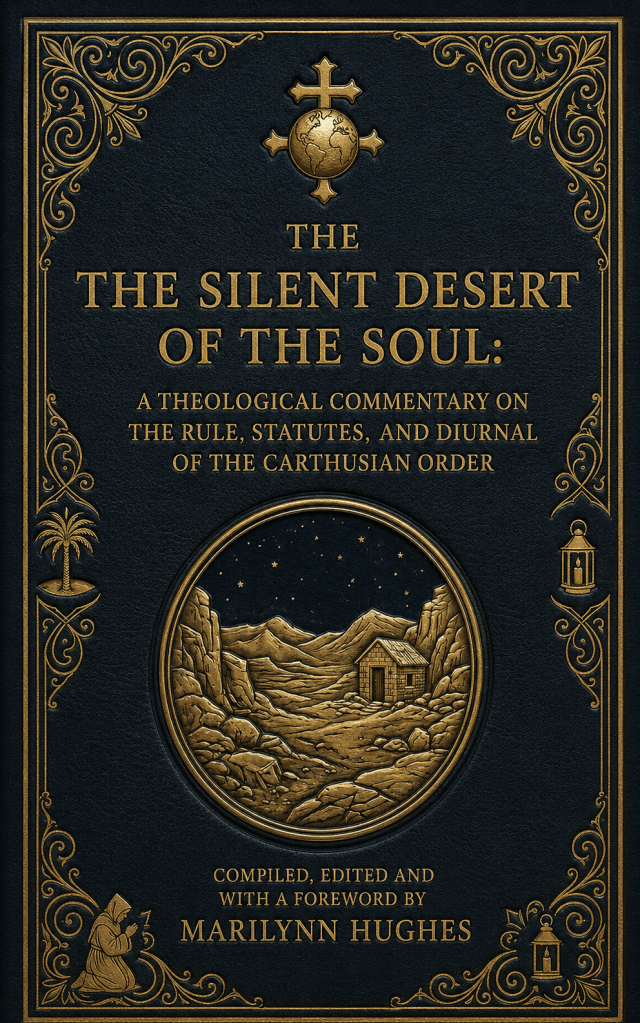
The Silent Desert of the Soul: A Theological Commentary on the Rule, Statutes, and Diurnal of the Carthusian Order

BY MARILYNN HUGHES

The Silent Desert of the Soul: A Theological Commentary on the Rule, Statutes, and Diurnal of the Carthusian Order

By Marilynn Hughes

The Silent Desert of the Soul: A Theological Commentary on the Rule, Statutes, and Diurnal of the Carthusian Order, By Marilynn Hughes – ENTER THE CRUCIBLE OF ABSOLUTE SILENCE For nearly a millennium, the Carthusian Order has preserved an unyielding secret. Operating under the legendary absolute maxim, Cartusia numquam reformata quia numquam deformata—”The Charterhouse has never been reformed because it has never been deformed”—this ancient lineage of Christian hermits has rejected the noise of human civilization to construct the ultimate earthly laboratory of the human spirit. In this groundbreaking textbook commentary, contemporary theologian and seasoned soul traveler Marilynn Hughes delivers a profound, multi-dimensional deconstruction of the Carthusian charism. Moving far beyond traditional historical analysis, this master reference work uncovers the hidden energetic, psychological, and metaphysical structures buried within the Carthusian Statutes and the Diurnal Liturgy of the Hours. Discover the Hidden Architecture of Eremitic Ascension: • The Law of Enclosure: Learn how the rigid boundaries of the individual monastic cell function as a precise “energetic container” engineered to collapse the lower ego. • The Liturgical Engine: Track the complete twenty-four-hour daytime and nighttime circuit—from the dark watches of the Midnight Vigil to the dawn ardor of Prime and Terce—and discover how it systematically aligns the spirit with the celestial gears of the cosmos. • The Psychology of Silence: Witness the profound psychological alchemy that takes place inside total containment, converting isolation into a vast theater of supernatural stillness (quies). • The Contemplative Stream: Immerse yourself in a series of deep, experiential meditations designed to let the reader put on the cowl, step onto the continuous altar of the heart, and vanish into the holy resurrection of absolute divine absorption. Divided into three distinct thirds—bridging rigorous academic framework with raw, immersive contemplative practice—this volume stands as an essential, definitive manual for serious practitioners, theologians, and researchers of the world’s hidden spiritual lineages. Slip quietly past the third dimension, strip away the secular garment of the false self, and step into the timeless, blazing heart of the Divine Reality. Elevate your master reference library with this foundational textbook today.

Reviews

“Dear Marilynn, I spent some time with The Silent Desert of the Soul, and I kept thinking about something our culture rarely teaches us. Most people are trying to escape silence. Your book suggests silence may actually be the place where everything important begins. That feels like the real invitation behind this work. Rather than presenting the Carthusian tradition as an interesting piece of church history, you’ve opened a window into a way of life that has quietly endured for centuries because it asks the deepest possible question: what happens when every distraction is stripped away and a person stands before God with nothing left to hide behind? What fascinated me most was your exploration of enclosure, solitude, and the rhythm of monastic life not simply as religious practices, but as a complete transformation of the human person. The monastery becomes far more than a place. It becomes a space where the false self slowly falls away and something eternal begins to emerge. I was equally drawn to the way you move beyond historical commentary into the interior life itself. Your reflections invite readers to see prayer, silence, discipline, and contemplation as living realities rather than distant ideals preserved in ancient books. Whether someone has ever stepped inside a monastery or not, the questions your book raises feel surprisingly personal.” – Naomi, The Book Stage

“What immediately stood out to me about The Silent Desert of the Soul: A Theological Commentary on the Rule, Statutes, and Diurnal of the Carthusian Order is its profound title and the promise of offering readers a deeper understanding of one of Christianity’s most contemplative monastic traditions. I was especially drawn to how the book appears to illuminate the spiritual richness of the Carthusian way of life while inviting readers to reflect on silence, prayer, discipline, and the pursuit of deeper communion with God. I would love to discuss the inspiration behind your work, the enduring relevance of Carthusian spirituality, and the theological insights you hope readers will carry into their own spiritual journeys.” – Victor Liz, The Writers Corner

“What immediately stood out to me about The Silent Desert of the Soul: A Theological Commentary on the Rule, Statutes, and Diurnal of the Carthusian Order is the way it offers a thoughtful exploration of one of Christianity’s most contemplative monastic traditions. By providing a the deeper understanding of silence, prayer, solitude, and the spiritual disciplines that have shaped Carthusian life for centuries. I believe your book makes for a fascinating exploration around the spiritual significance of the Carthusian tradition, the theological foundations of contemplative monasticism, the role of silence and solitude in Christian spiritual formation, and how the wisdom of the Carthusian Rule continues to offer guidance for those seeking a deeper relationship with God in today’s increasingly distracted world. I would love to explore the inspiration behind your book, the research and spiritual reflections that informed your theological commentary, and the insights you hope theologians, clergy, students of monasticism, and readers interested in contemplative Christianity will gain from your work.” – Gloria Pez, Stories that Inspire

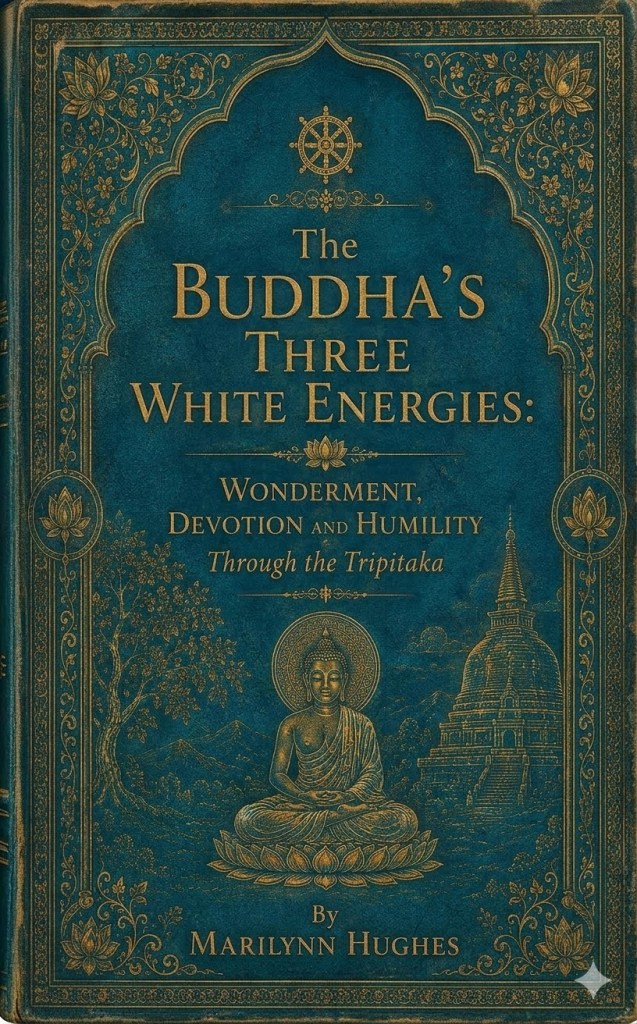
The Buddha’s Three White Energies:

Wonderment, Devotion and Humility Through the Tripitaka

BY MARILYNN HUGHES

The Buddha’s Three White Energies: Wonderment, Devotion and Humility Through the Tripitaka

By Marilynn Hughes

The Buddha’s Three White Energies: Wonderment, Devotion and Humility Through the Tripitaka, By Marilynn Hughes – AN UNBIASED TEXTBOOK ENCOUNTER WITH THE BLISSFUL SOURCEThis groundbreaking text stands as a definitive phenomenological exploration into the very bedrock of spiritual liberation. Grounded entirely in a profound, unedited mystical encounter in which the Buddha directly initiated author Marilynn Hughes into the core vibrational frequencies of the cosmos, this volume bridges direct experience with the ancient canonical architectures of Eastern spirituality. Moving far beyond abstract philosophical speculation, the text traces a systematic deconstruction of the lowercase ego. It uncovers how three foundational currents—Wonderment, Devotion, and Humility—function as an energetic engine designed to cleanse the subtle anatomy and dissolve the conceptual illusions of the third dimension. Through this independent textbook commentary, these pure states of being are revealed not as doctrine, but as lived modes of operational perception that gradually unveil the deep, unyielding structure of reality itself. Map the Experiential Anatomy of Buddhist Canonical Practice: • The Energy of Wonderment: Discover how sacred awe, intense curiosity, and the arrest of the everyday mind fracture sensory mechanics, opening the consciousness to higher spiritual perceptions. • The Energy of Devotion: Examine the high-vibrational current of total spiritual surrender, mapping how single-pointed focus to the uncreated reality completely clears the subtle channels of egoic agitation. • The Energy of Humility: Dissect the ultimate psychological and metaphysical purge, where the systematic lowering of self-importance triggers a profound internal vacuum, allowing awareness to merge with the Infinite. A Flawless Synthesis of Scripture and Direct Phenomenological Sight: • The Sutta Piṭaka: Early discourses utilized as resonant, objective confirmations of what is directly encountered within consciousness when it is no longer organized around fixation. • The Vinaya & Abhidhamma: The disciplinary frameworks and analytical clarity of the Pali Canon integrated as precise blueprints for internal energetic stabilization. • Mahāyāna Thought: Expansive insights weaving themes of impermanence, non-self, emptiness, and suchness (tathātā) into a reflective narrative of experiential unfolding. The culmination of this scholarly reference work is not a conclusion, but a radical return: to ordinary experience seen entirely without distortion, where nothing is excluded from awareness, and nothing requires separation in order to be known. This is an essential textbook for serious researchers of global world religions, comparative mysticism, and the direct phenomenological exploration of consciousness. Elevate your master reference library and secure this foundational volume in your collection today.

Reviews

“Dividing spiritual dissolution of the ego into exactly three currents, wonderment, devotion, and humility, and then mapping each one onto specific sections of the Pali Canon rather than leaving the framework abstract, is a genuinely unusual structural choice for a book this compact. Most writing in comparative mysticism either stays in the territory of direct experience or stays in the territory of scholarship, rarely trying to hold both at once with this much precision. Grounding wonderment in the arrest of ordinary sensory mechanics, devotion in the clearing of the subtle channels through single pointed focus, and humility in what you describe as a systematic lowering of self importance that opens awareness toward the infinite, gives each of these three states its own distinct mechanism rather than treating them as interchangeable virtues. Weaving in the Sutta Pitaka, the Vinaya and Abhidhamma, and Mahayana concepts like emptiness and suchness as points of confirmation for what you describe encountering directly, rather than as separate scholarly material bolted onto a personal account, is a difficult synthesis to pull off convincingly, and it reflects the same disciplined approach that has run through your work since 1987.” – Demyte Nathan, Luminary Agency, Ottawa Ontario, CN

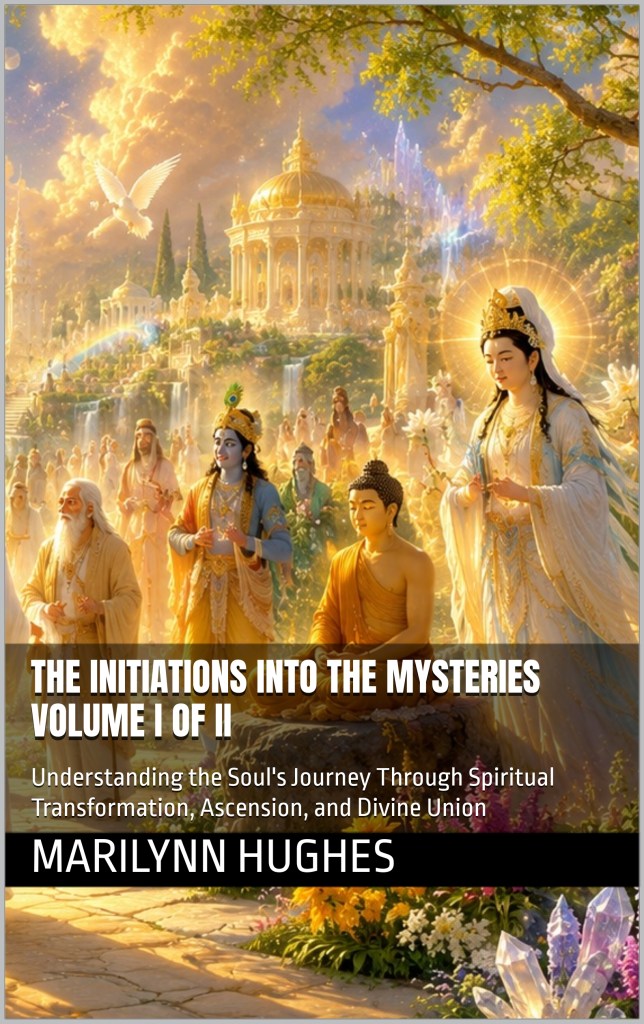
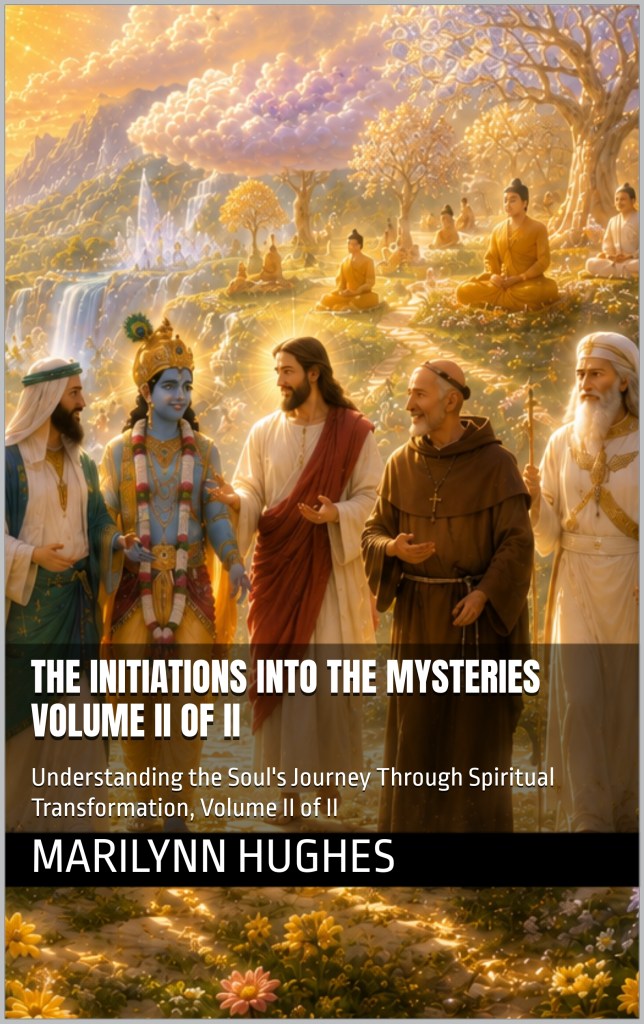
The Initiations into the Mysteries: Understanding the Soul’s Journey Through Spiritual Transformation, Ascension, and Divine Union (In Two Volumes)

BY MARILYNN HUGHES

The Initiations into the Mysteries: Understanding the Soul’s Journey Through Spiritual Transformation, Ascension, and Divine Union, Volume I

The Initiations into the Mysteries: Understanding the Soul’s Journey Through Spiritual Transformation, Ascension, and Divine Union, Volume II

Also Read ‘Initiations into the Mysteries: The Mystic Knowledge Series’

The Initiations into the Mysteries: Understanding the Soul’s Journey Through Spiritual Transformation, Ascension, and Divine Union

By Marilynn Hughes

What are ghosts? What are lost souls? And what do encounters with them reveal about the nature of consciousness itself? For centuries, reports of apparitions, hauntings, spirit encounters, and communications with the dead have fascinated humanity. Yet beneath these experiences lies a deeper question: What actually survives death, and how does consciousness continue beyond the physical world?

Drawing upon decades of spiritual experiences, mystical exploration, and careful examination of afterlife phenomena, Marilynn Hughes presents a comprehensive investigation into the reality of ghosts and lost souls. Moving beyond folklore and superstition, this explores both the phenomenology of spiritual encounters and the ontology of consciousness itself.

Readers will journey through accounts of earthbound spirits, transitional states after death, spiritual oppression, symbolic perception, and encounters with non-human intelligences. Along the way, larger questions emerge concerning spiritual law, reincarnation, Timelessness, the evolution of consciousness, and the soul’s relationship to Divine Reality.

Rather than offering simplistic answers, this work provides a framework for understanding the deeper processes underlying spiritual experience. Ghosts and lost souls are revealed not as anomalies or curiosities, but as participants in a larger journey of growth, transformation, and awakening.

At once philosophical, spiritual, and experiential, Ghosts and Lost Souls: Phenomenology and Ontology of Spiritual Encounter invites readers into a profound exploration of life, death, consciousness, and the enduring journey of the soul.

An Astral Projection and Out-of-Body Travel Book by Marilynn Hughes

Reviews

“I recently discovered The Initiations into the Mysteries: Understanding the Soul’s Journey Through Spiritual Transformation and was immediately intrigued by its ambitious exploration of mystical traditions from across cultures and throughout history. Bringing together recurring themes from diverse spiritual narratives creates a fascinating study of humanity’s enduring search for meaning, transformation, and transcendence.

What particularly captured my attention was your examination of the common patterns found among mystics, saints, visionaries, and spiritual seekers from many different traditions. Exploring concepts such as initiation, spiritual guidance, symbolic trials, revelation, and transformation through a comparative lens offers readers an opportunity to consider how these timeless themes have appeared throughout history and continue to inspire literature, philosophy, and imaginative storytelling.

I also appreciated the breadth of the work. Through its extensive chapters, the book explores profound questions surrounding consciousness, personal transformation, and humanity’s search for deeper understanding. Whether approached from historical, philosophical, literary, or spiritual perspectives, these subjects invite thoughtful reflection and meaningful discussion.” – Alesa, Scifi Twist Book Club, USA

“I recently came across The Initiations into the Mysteries, and I wanted to reach out because I was genuinely fascinated by its premise. What immediately captured my attention was the way you bring together mystical traditions from different cultures, religions, and historical periods to explore the possibility that they all point toward the same universal journey of spiritual awakening. Rather than treating these accounts as isolated experiences, you examine the remarkable patterns they share, inviting readers to consider that there may be a deeper spiritual reality connecting them all.

I also appreciated that the book doesn’t stop at discussing symbolism. Exploring the idea that sacred realms, spiritual guides, initiatory trials, and transformative encounters could represent actual dimensions of consciousness gives the work a much broader scope. It encourages readers to think beyond philosophy and consider the possibility of genuine spiritual transformation.

Another aspect that stood out to me was the structure of the book. Guiding readers through the call to initiation, the purification of the soul, ascension, divine union, and the evolution of consciousness creates the feeling of a complete spiritual journey rather than a collection of separate ideas. The questions you raise about the soul’s purpose, the nature of mystical experience, and humanity’s ultimate destiny are the kinds of themes that naturally invite reflection long after the final chapter.

While looking into your book, I noticed you’ve created a substantial work that will appeal to readers interested in mysticism, comparative spirituality, and consciousness studies.” – Florence Sterling, Reader, London, UK

Astral Projection, Astral Travel, Out of Body Travel, Out of Body Experiences, Out of Body, OBE, Near Death Experiences, Mystical Experiences, Marilynn Hughes

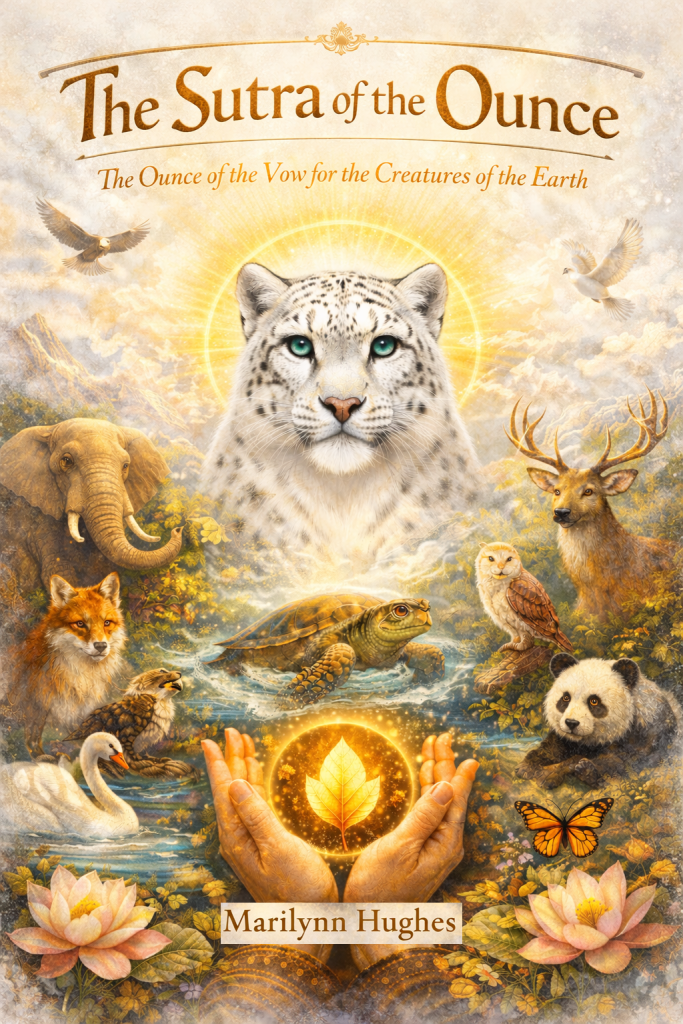
The Sutra of the Ounce: The Ounce of the Vow for the Creatures of the Earth, By Marilynn Hughes

BY MARILYNN HUGHES

The Sutra of the Ounce is a gentle, luminous guide to living with awareness, care, and presence. It is not a manual of commandments, nor a call to heroic acts. Instead, it teaches the power of small, daily vows — the quiet attentions, the moments of restraint, mercy, and witness that sustain life. By Marilynn Hughes

The Sutra of the Ounce: The Ounce of the Vow for the Beings of the Earth, By Marilynn Hughes – An ounce is enough.

The Sutra of the Ounce is a gentle, luminous guide to living with awareness, care, and presence. It is not a manual of commandments, nor a call to heroic acts. Instead, it teaches the power of small, daily vows — the quiet attentions, the moments of restraint, mercy, and witness that sustain life.

Mountains move without hurry, trees give without asking, oceans grieve without resentment — and humans, too, are part of this unfolding. Illumination is found not in grand gestures, but in attention, care, and presence, quietly offered every day.

An ounce is enough. An ounce of attention. An ounce of care. An ounce of love quietly offered. In these small gestures, illumination blooms — subtle, persistent, and enduring. And when the heart wants to flee, when we feel lost or overwhelmed, these ounces return, soft and insistent, guiding us back to presence, to the Earth, and to the ordinary sacredness of living with awareness. This sutra reminds us that love, care, and awakening are not found in grand gestures, but in the small, faithful acts repeated every day.

This sutra invites readers to practice remembering: to bring water when the world burns, to sit beside it when it is silent, to offer honesty, stillness, and attention when action feels impossible. Liberation begins not in grandeur, but in the small gestures repeated over time — hands open, eyes soft, feet touching the Earth with apology and gratitude.

A meditative, poetic, and deeply compassionate work, The Sutra of the Ounce is for anyone seeking a closer connection to life, to the natural world, and to the ordinary acts that honor it.

Reviews

“88 pages in and already very grateful. Thank you so much documenting this wisdom and sending this to me. Your ability is insane. Everytime I found myself getting overwhelmed today I would nearly cry repeating to myself, “If the vow feels heavy, you are carrying more than an ounce.” I read up to the workbook and now look forward to using four bookmarks and working backwards and beginning again and again and never mastering it, but aware. Thank you.” – Georgia Stefos, New Jersey, USA

“I have had the distinct pleasure to read the Sutra of the Ounce. The book immediately got my attention by setting the mood through short but thought provoking statements that repeatedly promote the idea of perseverance and diligent effort of doing “an ounce” each day to promote peace, love and harmony in one’s life. The book has different formats which help to keep the reading moving forward. Although the book is about 660 pages, I found the book to continue to captivate my interest. As you read through the passages, I noticed a significant change in my feeling about approaching life with an attitude of hope, joy, peace, love, gratitude and optimism. Reading this book is like a beautiful form of Meditation. I absolutely love this book!” – Andrew Hughes, Fountain Hills, AZ USA

What Builds Mental Strength When Life Won’t Slow Down

The Interior of  Person's Mind Overwhelmed with Stress.

Guest Post by Susan Treadway

Anxiety doesn’t usually announce itself with drama. It creeps in—quiet, familiar, exhausting. You might feel it as the twitchy mind at 2 a.m., the invisible weight during a routine conversation, or the silent second-guessing that disrupts small decisions. But resilience? That’s quieter still. It’s in the steady refusal to collapse. It’s in systems, not sprints—tiny behavioral pivots that rewire the nervous system, build internal grip, and create footing where things feel slippery. What follows isn’t a cure. It’s a rhythm map. A practical, lived-in framework for managing anxiety while building the kind of grounded strength that doesn’t need to shout to be heard.

Reset Your System With Breath

Your breath is not a life support system—it’s a steering wheel. Most of us walk around defaulting to shallow inhales, chest rising, tension storing. But when anxiety swells, there’s one lever you can reliably pull: breath regulation. When breathing controls emotional regulation, it means you’re no longer outsourcing calm to circumstance. Instead, you’re guiding your internal environment toward stillness—on command, mid-chaos. Techniques like box breathing or diaphragmatic patterns aren’t mystical rituals; they’re mechanical interventions. Slow, conscious breathing sends a direct signal to your parasympathetic nervous system: you’re not under threat.

Give Your Mind a Purposeful Challenge

Not all anxiety needs soothing. Sometimes, it needs redirection. Whether that’s studying algorithms, debugging code, or learning a new language, you’re saying to your mind: “Let’s go here instead.” Skill-building provides a forward motion—an antidote to emotional stagnation. That’s why this is a good choice—not as a career path alone, but as a structure that provides momentum. When you’re enrolled in something intellectually demanding, your bandwidth is directed toward problem-solving, not problem-looping. Long-term skill pursuit isn’t an escape. It’s orientation.

Make Movement Your Baseline

You don’t have to love exercise to respect what it does for your mind. It’s not about image or performance. Consistent movement rewires the body’s stress response by gradually shifting how your body handles spikes in pressure. Physical strain metabolizes stress hormones. Repetition fosters familiarity, and familiarity breeds trust in your own body. The goal isn’t athleticism—it’s friction-proofing your nervous system. Movement won’t solve your problems. But it gives you the bandwidth to face them without flooding.

Don’t Go It Alone

Resilience isn’t an individual sport. That bootstraps-only narrative is a trap. Strong social ties lower physiological stress responses and support emotional recovery. In reality, community is insulation. Friends who check in, coworkers who make space, family who stay calm when you’re not—these aren’t just nice-to-haves. They’re mental infrastructure. The mere act of saying “I don’t have this figured out” in a safe space dismantles shame. It shrinks anxiety’s power.

Anchor in the Present

The mind will try to time-travel—back to regrets, forward to worst-case futures. Anxiety feeds on that drift. Mindfulness brings the nervous system back online when practiced regularly, even for a minute at a time. This is where mindfulness enters—not as an app trend, but as a muscle. A footstep. A breath. A sensation. You don’t need to be Zen. You just need to notice what’s already here.

Clean Up the Sleep Debris

If you want to build resilience, you have to start with sleep. It’s the factory reset button most people ignore. With steady habits in place, consistent sleep reduces reactive mental noise and restores your emotional range. Poor sleep doesn’t just make you tired—it scrambles your executive function, shrinks your emotional range, and amplifies anxious loops. Those two a.m. spirals? They’re usually cortisol talking. Sleep isn’t a luxury—it’s resilience scaffolding.

Grow Something That Grows You

There’s something strange and holy about tending to a living thing. You water it. It responds. Tending plants supports emotional recalibration through steady, low-stakes care. Gardening—and other forms of quiet tending—aren’t just hobbies; they’re emotional ecosystems. You’re allowed to start tiny. A window herb. A pot of soil. You return to it. It responds. That reciprocity is resilience in motion.

Most people try to fix anxiety at the height of the storm. That’s like building a roof during a hurricane. Start smaller. Start sooner. Resilience isn’t built by eliminating all stress—it’s built by becoming someone who can weather it. You build this in layers: breath, sleep, movement, community, focus. No single habit will save you. But together, they thicken your emotional floor. So when life hits—and it will—you don’t shatter. You bend. You reset. And you come back to yourself a little steadier each time.

Embark on a transformative journey with Out of Body Travel and explore the mysteries of the universe from a whole new perspective!

Listening to Your Inner Guidance: The Power of Intuition

GUEST POST by Eva Muller – https://www.nextelevations.com/post/listening-to-your-inner-guidance-the-power-of-intuition

Intuition is something that truly comes alive on the journey of awakening and healing. It’s not learned from books or teachers—it’s the pure impulse of truth that rises within you in the present moment. Sometimes it comes as guidance—“ask this person,” “take this step,” or “wait, don’t move yet.” Other times it arrives like a bubble of knowing, where you simply *know* how to do something without being taught.

This is your personal Highest Truth, the inner guru, your deepest guidance. And no one else in the world can know this truth for you.

Why Intuition Feels Hard to Hear

I remember when I couldn’t hear my inner guidance at all. Books told me to “listen to my intuition,” but all I heard was noise—emotions bubbling up, thoughts swirling, and the voices of parents, teachers, or society echoing in my head.

Emotions rise and fall quickly, and we often make decisions through their lens instead of from clarity.

Thoughts and stories of the mind are loud, and we often mistake them for intuition.

Conditioning from family, culture, and admired authorities pulls us toward their choices, not our own.

Energetic influences—ancestral, past life, or external—layer themselves over our inner truth.

No wonder we don’t trust ourselves. Instead, we hand over authority to others and forget that the answers are within.

Clearing the Noise

This is why healing and clearing are so essential. As we release these emotional, mental, and energetic layers, what remains is an **empty, clear space**—empty of noise, yet full of silence, stillness, and clarity.

And from that silence, intuition arises naturally. In that moment, you *know*. And nothing anyone says can shake that knowing, because you recognize it as your **truth**.

Recognizing Intuition

How do you know when it’s intuition and not just another thought? Intuition arises instantly, like a flash of light. It often doesn’t “make sense” to the logical mind, but it carries a certainty that feels solid. When you follow it, the outcome is always the best possible one for you in that moment.

A simple practice: If you’re unsure, assign two choices to heads and tails of a coin. Flip it—and notice your immediate inner response. Do you feel relief or disappointment? That first impulse is your truth. Everything that comes after—the doubts, the “shoulds,” the reasoning—that’s just noise.

Living From Intuition

Over time, as the system clears, intuition comes forward more and more. It becomes the natural compass of your life. And life itself becomes simple. There’s less struggle, less second-guessing, and more trust in the flow of each moment.

Your intuition is your highest truth. It is your guiding light. And the more you allow it, the more you realize—it was always there, waiting beneath the noise.

With love,

Eva 🌿🙏❤️

Free Weekly Healing Meditation and Energy Transmission each Thursday 12pm PST with Eva Muller – https://www.nextelevations.com/freemeditation, https://www.em-healing.com/
Youtube Channel: https://www.youtube.com/@em-healing
Next Elevations 14-day free trial: https://www.nextelevations.com/
E-Mail: info@em-healing.com

Guest opinions or views do not necessarily reflect those of the host, website or affiliates, and participation does not reflect an endorsement by the author, Marilynn Hughes.