
By Marilynn Hughes
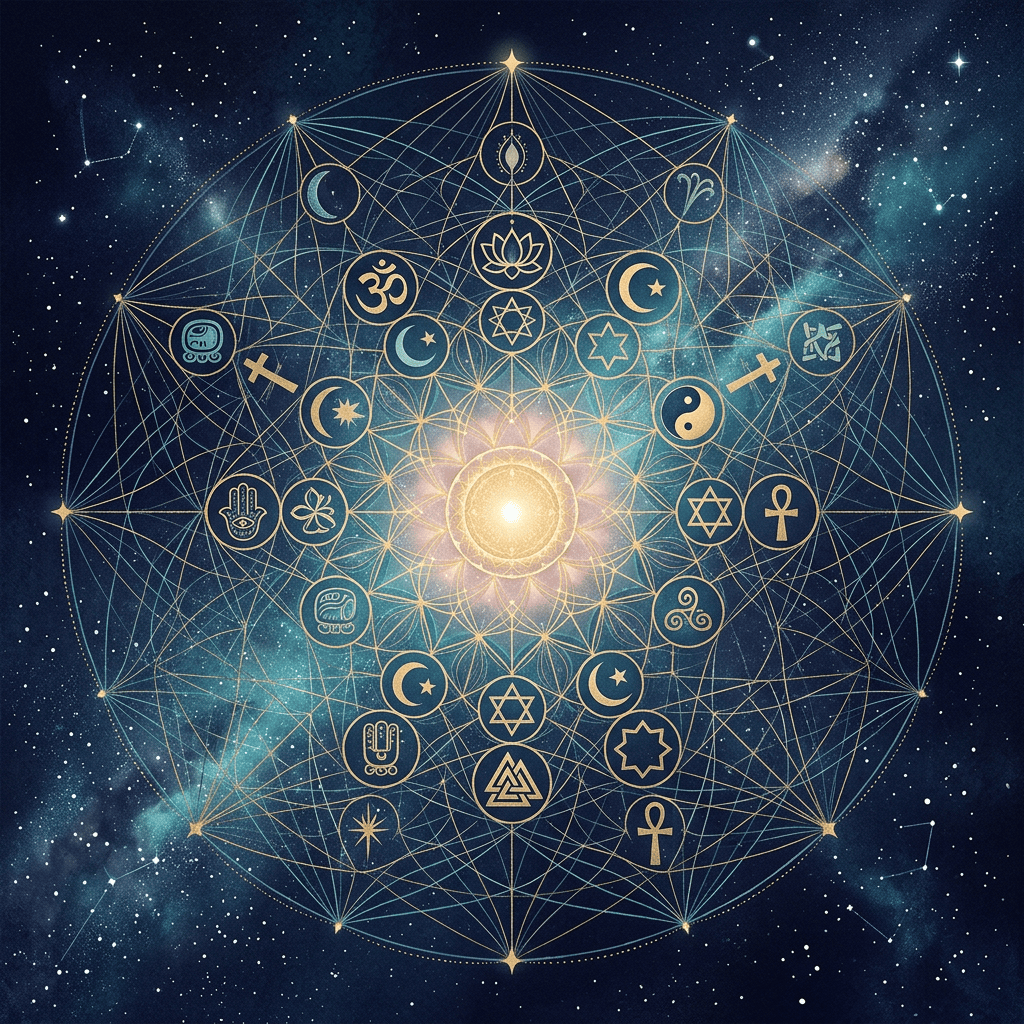
For over forty years, my work has been defined by a singular, vital crossover: bringing firsthand mystical exploration into direct conversation with the writings of ancient sages, Christian mystics, and spiritual traditions from around the world [historical sources].
In a contemporary spiritual landscape that focuses heavily on fast techniques, shifting mechanics, and various protocols for inducing altered states of consciousness, a critical question is often left unanswered: Once you enter the infinite, how do you map, interpret, and integrate what you experience?
To navigate the vastness of the unseen realms without losing your bearings, you must realize that you are not the first to walk these paths. The historical record preserves a universal language of direct spiritual experience—and it is the ultimate anchor for the modern consciousness traveler.
1. Bypassing the Solipsism of the Modern Mind
When an explorer has an extraordinary out-of-body experience, a common trap is to assume their personal insights are entirely unique, or conversely, to become deeply disoriented by the sheer scale of the unknown. Without a baseline of comparison, the ego can easily misinterpret a highly personal, plastic astral impression as an absolute, universal truth.
Studying humanity’s accumulated contemplative traditions acts as a profound check on the ego. When you read a text written by a 14th-century cloistered nun, a 4th-century desert monastic, or an ancient Vedic rishi, and you discover they described the exact same celestial geometries, harmonic frequencies, and encounters with light that you witnessed last night, something shifts. You realize your experience is not an isolated anomaly—it is a verified destination on the timeless map of human consciousness.
2. The Value of Comparative Mysticism
The purpose of preserving and comparing these historical sources is not to force our contemporary experiences into a rigid, dogmatic framework. Nor is it to assume that descriptions separated by thousands of years must refer to the exact same phenomenon.
Rather, the value lies in discovery. The historical record functions as an elite field guide for the soul. The ancient mystics spent lifetimes refining their spiritual senses to catalog the subtle variations between the lower planes of delusion and the highest spheres of divine illumination. By understanding their terminology, you inherit their discernment. You learn to recognize the subtle markers of spiritual density, the visual language of deceptive spirits, and the precise frequencies of the paradise spheres before you even separate from the physical frame.
3. Joining the Timeless Lineage
Direct experience is an incredible foundation for modern exploration. It demands that we focus on personal knowing rather than blind belief. But direct experience is only the beginning. It opens deep, shattering questions that require a lifetime of reflection and integration to fully unpack.
By grounding your personal, firsthand mystical exploration in the texts of the sages who came before us, you elevate your practice from a casual hobby into a sacred discipline. You are no longer just an isolated traveler wandering the dark; you become part of the unbroken lineage of humanity’s great contemplatives. The ancient texts illuminate your journeys, and your direct experiences bring the ancient texts to life.

